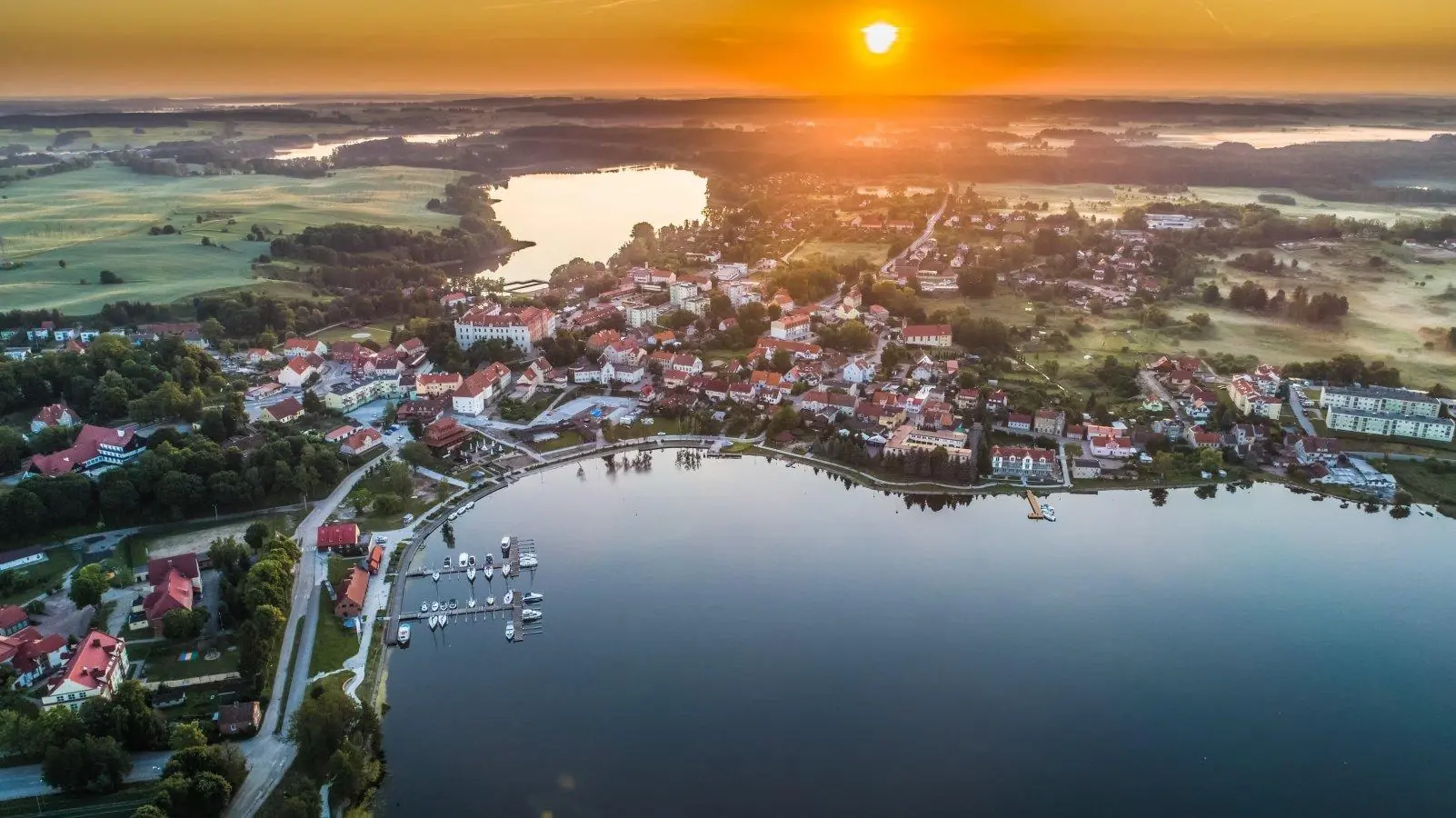
Some places in Masuria are loud, full of yachts, restaurants and holiday bustle. Others let you slow down a little. Ryn definitely belongs to the second group.
It is a small Masurian town between lakes Ryńskie and Ołów, where history quite literally towers over the present: a mighty 14th-century Teutonic castle stands on a hill in the middle of town.
Ryn does not try to compete with Mikołajki on the number of restaurants or with Giżycko on the scale of its sailing facilities. It has its own rhythm. In the morning you can walk around the almost perfectly calm Lake Ołów, then go down to Lake Ryńskie to watch the yachts, and in the evening come back to the floodlit castle walls.
It is this combination of two lakes, history, sailing and an intimate atmosphere that makes Ryn one of those places in Masuria that definitely deserve more than a quick drive through.
01Ryn: a town between two lakes
Ryn's setting is exceptional even by Masurian standards. The town lies between Lake Ryńskie and Lake Ołów, and each of them has a completely different character.
Lake Ryńskie is part of the Great Masurian Lakes system and leads by water towards the best-known lakes in the region. The town's official website points out that you can sail to Ryn from many places in the Great Masurian Lakes area.
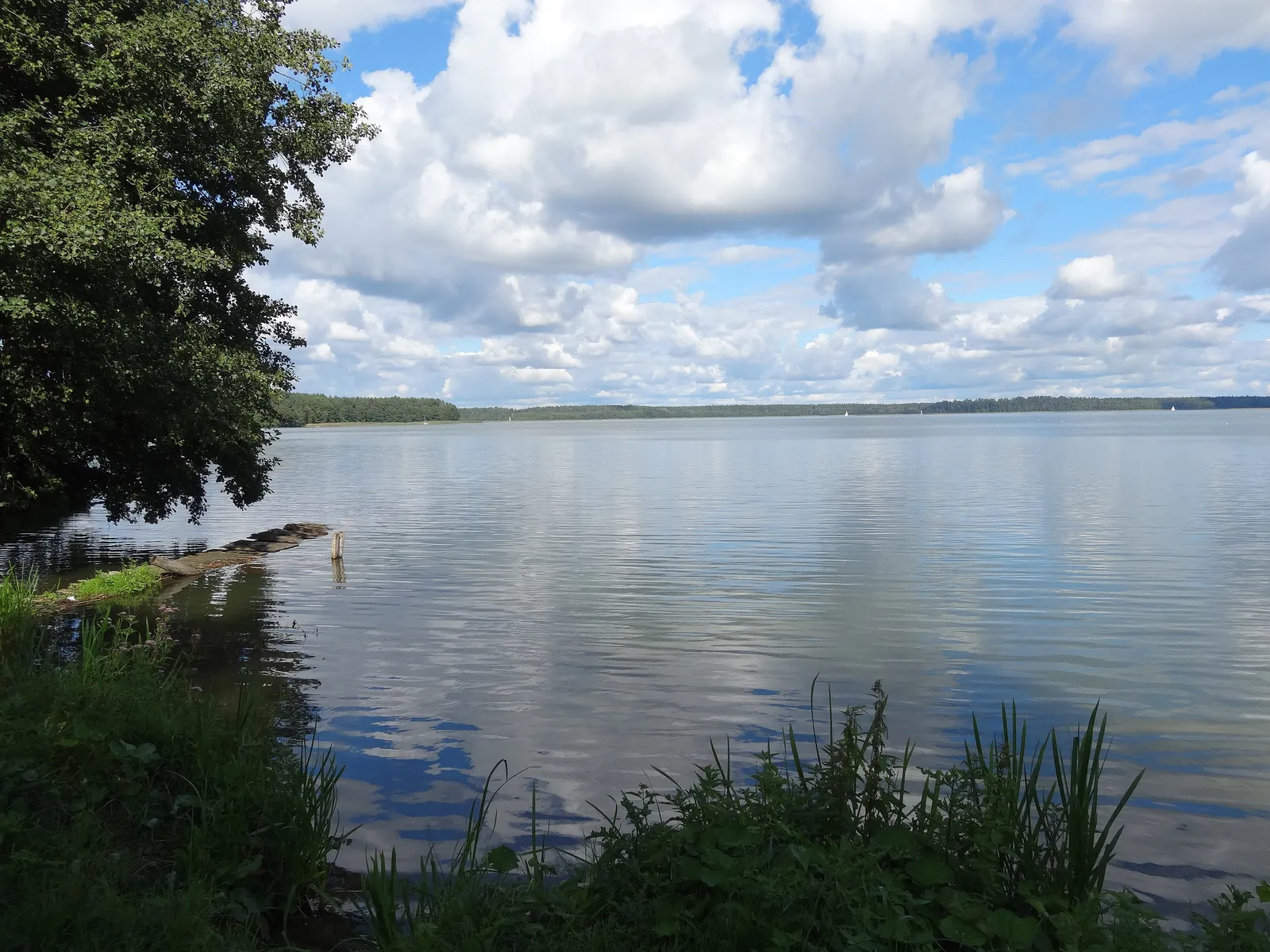
Lake Ołów is its opposite. It is a calmer lake lying almost directly below the castle. A walking and leisure trail of more than four kilometres runs around it, close to the shore for much of the way. The lake covers about 61 hectares and is more than 40 metres deep at its deepest point.
That means in a single day you can see two completely different faces of Masuria. On one side of town there is the harbour, the boats and the sailing character of Lake Ryńskie. On the other, the forest, the path along the shore of Lake Ołów and a much calmer atmosphere. And right between them rises one of the most distinctive landmarks in this part of the region.
02Ryn Castle: history you cannot miss
It is hard to visit Ryn and not notice the castle. The monumental building stands on a hill between the two lakes and dominates the town's skyline. According to historical sources, the earliest mention of the fortress at Ryn comes from the chronicle of Wigand of Marburg from 1377. Not long afterwards Ryn became the seat of a Teutonic commandery.
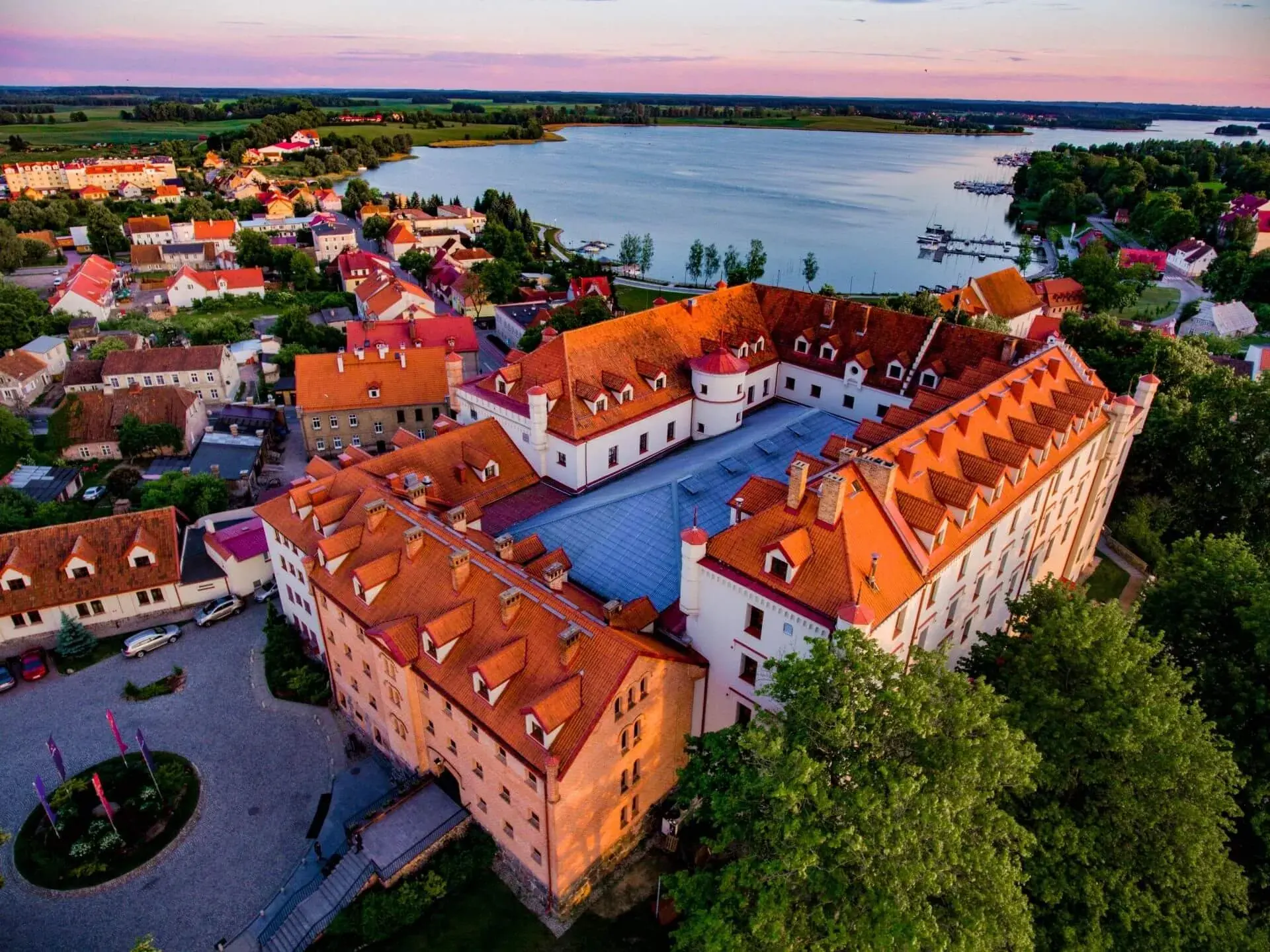
The castle was not just a fortress. It was also an administrative and economic centre. Large estates were run from here, food and supplies were stored, and its importance in the state of the Teutonic Order grew over time. Other castles and estates in this part of Masuria came under the commander of Ryn.
The present building is the result of many alterations. Over the following centuries it changed owners and uses. After the secularisation of the Order's state it served among other things as a residence, and later became a prison. After a fire in 1881 it was rebuilt in the Gothic Revival style.
Today a hotel operates within the walls of the old fortress, but the building's historic character remains one of the key elements of Ryn's identity. The castle also offers guided tours, so history here is not locked away in a museum display case.
Leaving the town centre, you find yourself beneath walls that remember the Teutonic Knights, armed conflicts and a completely different political map of this part of Europe.
03A castle, a lake and one of the best settings in Masuria
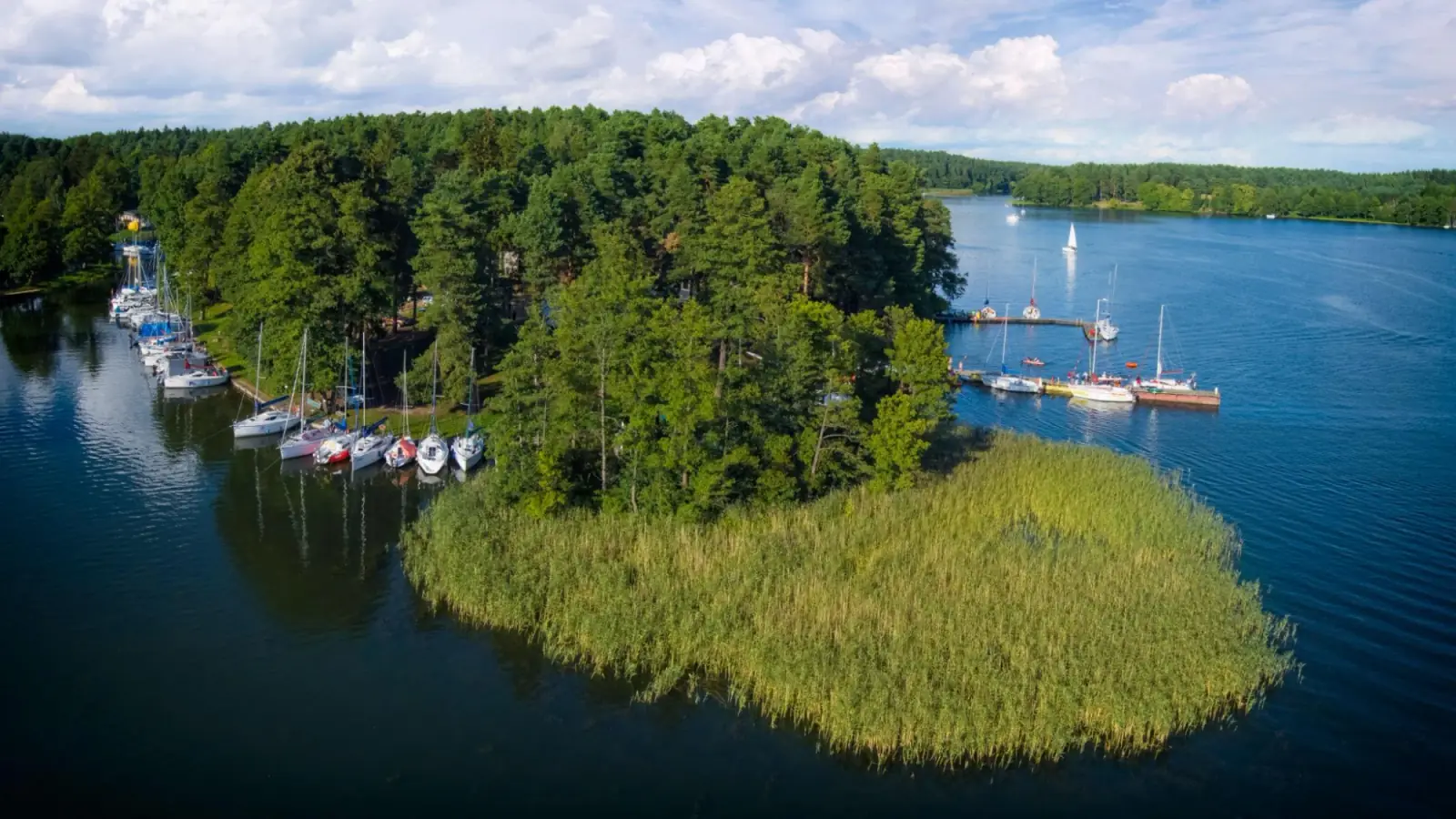
What impresses most is best seen from above. The castle stands exactly between lakes Ryńskie and Ołów. On one side lie the town centre and the harbour, on the other a calmer lake surrounded by greenery.
That is no accident. When building their fortresses, the Teutonic Knights made use of the natural lie of the land. Lakes, hills and isthmuses made defence easier and at the same time allowed them to control the trade routes.
In Ryn this is especially clear. Even today the castle seems to be the focal point of the town. Walk a little way from the shore of Lake Ryńskie and the distinctive outline of the fortress appears above the rooftops.
It looks particularly striking in the evening, when the harbour slowly falls quiet and the lights of the town and the castle are reflected in the water.
04The underground canal: one of Ryn's most unusual monuments
Ryn also has an attraction that is easy to miss. Lakes Ołów and Ryńskie are connected by a medieval underground canal. It was built in the days of the Teutonic Knights and is more than 170 metres long. The difference in level between the two lakes was used to let the water power the castle mill.
The difference in level is about seven to eight metres over a relatively short distance. Part of the historic system can be seen near the old mill.
It is a great example of medieval engineering. When we think of Teutonic castles, we usually imagine walls, armouries and knights. Yet such places were complex economic organisms. They needed access to food, water, workshops and the energy to run their mills.
The canal in Ryn shows this less obvious side of medieval life.
Ryn in numbers
- 1,377
- first mention of the castle
- 1,723
- town charter
- 170m+
- of underground canal between the lakes
- 61ha
- area of Lake Ołów
- 4km+
- walking loop around Lake Ołów
05A walk around Lake Ołów
If after exploring the town you want to leave history behind for a while, just walk over to Lake Ołów. This is one of Ryn's greatest strengths. You do not need to get into the car or drive a few kilometres out of town to find yourself practically in the middle of nature.
A walking and leisure loop of more than four kilometres runs around the lake. It starts near the castle and the town beach, then follows the shore, in places through the forest. Along the way there are rest areas, benches and shelters. You can walk the whole loop at an easy pace in one longer walk.
It is not about collecting yet another attraction. The greatest value is precisely the chance to slow down. In one place you walk almost right by the water, a little further on the path leads between the trees, and then the view of the lake opens up again.
In summer there is also a town beach and bathing area on Lake Ołów. That makes the lake just as good for an active day as for days when the only plan is a few hours by the water.
06Lake Ryńskie: where the real Great Lakes begin
On the other side of town lies Lake Ryńskie. Here Ryn's character changes almost instantly. Harbours, jetties and yachts appear. Lake Ryńskie is part of the Great Masurian Lakes trail, which makes Ryn a natural stop for those travelling around the region by water.
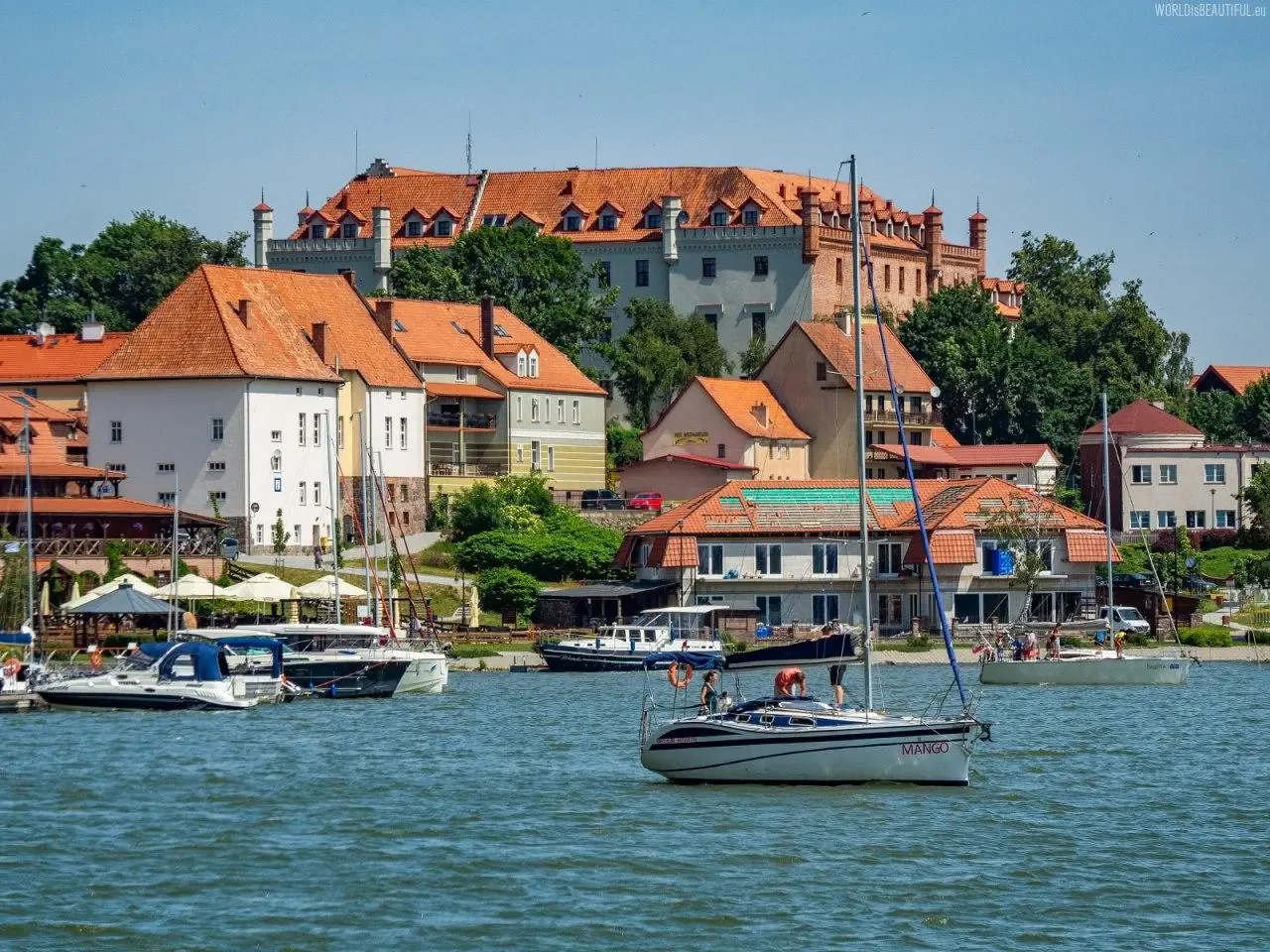
You can sail here, moor for the night, walk into town and a few minutes later stroll beneath the walls of a medieval castle. Combinations like this are one of the great phenomena of Masuria.
Sailing here is not a separate attraction created for tourists. For hundreds of years water was one of the basic ways of getting between towns. Today we see leisure yachts more often than cargo, but the geography of the region has stayed exactly the same.
07The harbour and the Ekomarina in Ryn
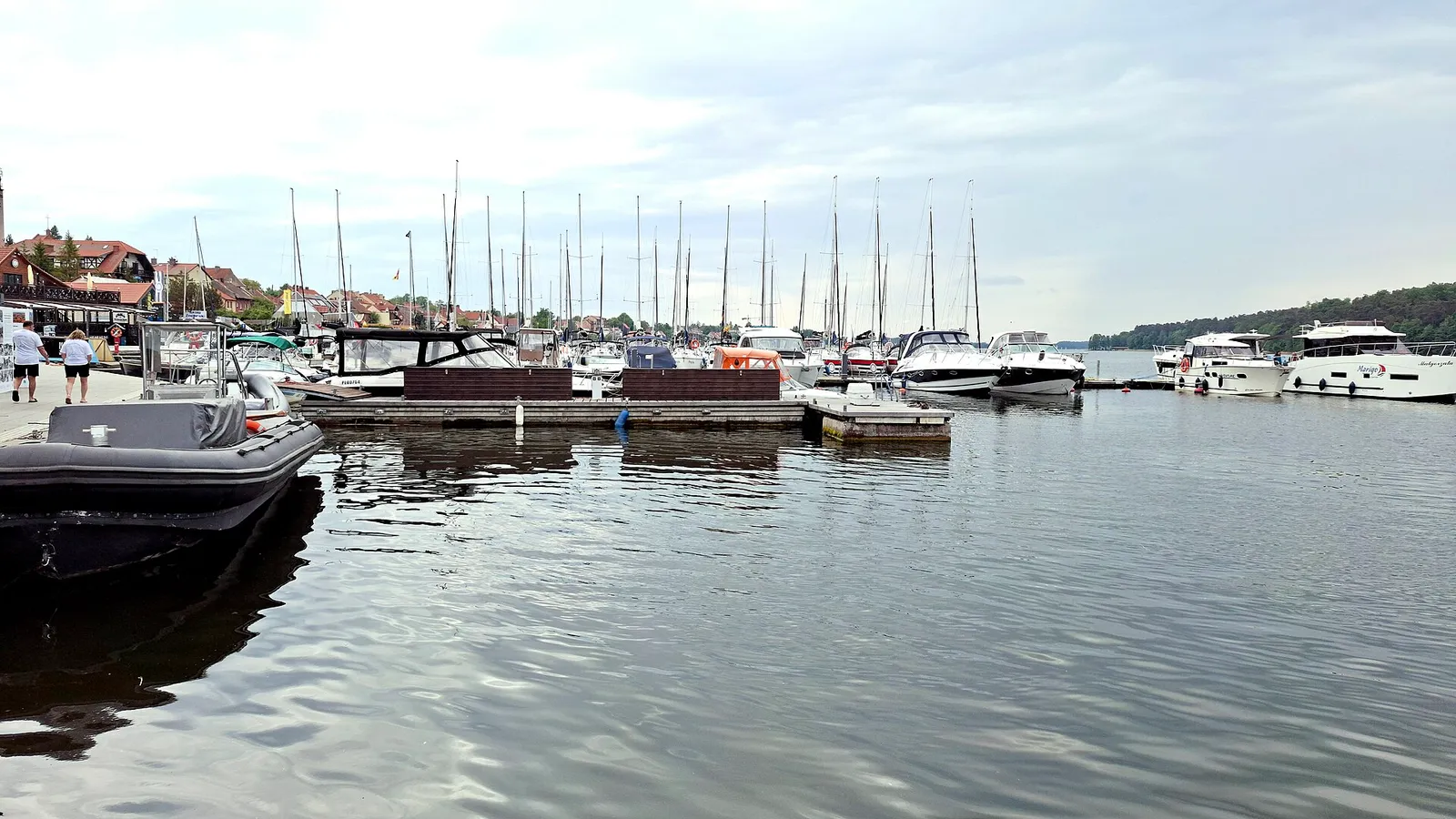
On Lake Ryńskie lies the harbour district of the town, with the Ekomarina. In summer it is one of the liveliest places in Ryn. Yachts coming and going, crews getting ready to sail on and people strolling along the shore create a typical Masurian atmosphere.
Ryn keeps a much more intimate character than the region's biggest sailing towns, though. For many people that is exactly its appeal. You can feel the atmosphere of the Great Masurian Lakes trail without having to spend all your time in the most crowded harbours.
08A small town best explored on foot
Ryn is not a place where you need a car to get between the main sights. You can easily explore most of the town on foot. From the harbour walk towards the centre, then up to the castle, and from there down to Lake Ołów to begin the walk around it.
Along the way, look out for the older buildings. Ryn has kept elements of the typical small-town architecture of Masuria, and one of its more interesting technical monuments is a 19th-century Dutch windmill.
It is not a town of grand town houses and broad avenues. And that is fine. Ryn's charm comes precisely from its small scale.
09The Dutch windmill: a less obvious symbol of Ryn
On a hill stands another distinctive building: a 19th-century Dutch-type windmill. According to regional sources it was built in 1873. From around the hill there is a view towards Lake Ryńskie.
Buildings like this are a reminder that historic Masuria was above all a farming region. Today we see the lakes mainly through the lens of holidays and sailing. For hundreds of years, though, for the people living in this part of Europe they were part of everyday life: a source of food, transport and work.
Windmills, watermills and manor farms were as much a part of the landscape as fishing boats.
10Ryn's history began long before the castle
Although the Teutonic Knights left the strongest mark on the town's architecture, people lived in this area much earlier. Traces of settlement from as far back as the Neolithic have been found in today's municipality. Later the area was inhabited by, among others, the Galindians, one of the Prussian tribes.
The Teutonic period came only later. The castle gave rise to a settlement growing at its foot. In time this settlement received market rights, and in 1723 King Frederick William I of Prussia granted Ryn its town charter.
The town later went through very difficult times. Raids, epidemics and conflicts repeatedly held back its development. The history of the area was complicated in the 19th and 20th centuries too, when Masuria lay within Prussia and later Germany.
After the Second World War Ryn became part of Poland and another chapter of its history began. Today's town is the result of many centuries of cultural, political and social change.
11The legend of the White Lady
An old castle without its own ghost? Ryn has its legend too, of course. According to one of the best-known tales, the castle is haunted by a White Lady, identified with Duchess Anna, wife of Grand Duke Vytautas of Lithuania.
The legend tells of the duchess and her children being imprisoned, held hostage in the political struggles between the Teutonic Knights and Vytautas. Historical truth and legend blend together here, but the tale remains part of the castle's tradition to this day.
There are many stories like this in Masuria. Old castles, palaces and abandoned estates almost always have their own tales of ghosts, treasure and underground passages. In Ryn the legends suit the place particularly well.
In the evening, when the castle's thick walls are floodlit, it really is easy to imagine that their story did not end several hundred years ago.
12Ryn for active visitors
The town's calm character does not mean you have to spend your whole stay on a bench by the lake. Ryn is a very good place for those who like an active holiday. You can kayak, take out a pedal boat, sail, walk around Lake Ołów or cycle out of town.
Ride a few kilometres and you are among fields, lakes and small Masurian villages. It is a completely different kind of travel from driving from one popular attraction to the next.
On a bike or on foot you start noticing things that are easy to miss from a car: old avenues of trees, small lakes, wayside shrines and lone farmsteads.
13Ryn in every season
If you think of Masuria as a place only for July and August, you should see Ryn out of season too.
Summer
Lake Ryńskie fills with yachts, the beaches and equipment hire are open and more people stroll by the water. Even so, Ryn keeps its intimate character: a good place for those who want to be close to the biggest attractions of Masuria, but not necessarily in the region's most crowded centre.
Autumn
There are fewer boats on the water, the path around Lake Ołów empties, and the trees around the lakes turn yellow, orange and red. Mornings can be cool and misty, and the castle rising above the rooftops looks more mysterious than on a summer day.
Winter
The snow-covered town, the frozen lakes and the huge castle create a landscape far removed from summer Masuria. There are few visitors and the pace is even slower: for those looking for walks and quiet, Ryn out of season can be more interesting than in midsummer.
14A good base for exploring Masuria
Ryn has one more big advantage: its location. It lies in the Great Masurian Lakes area, and from here it is easy to plan trips in different directions.
One day you can visit Mikołajki, the next head towards Giżycko, and the next spend in Mrągowo or the smaller villages and lakes hidden between the region's popular spots.
You do not have to work through a long list of attractions every day. Masuria works best when you leave some time between trips for simply doing nothing. Ryn is perfect for that.
15What is worth seeing during your stay in Ryn?
If you only have one day, focus on a few distinctive places:
- 01Ryn Castle and its surroundings
- 02the harbour on Lake Ryńskie
- 03a walk around Lake Ołów
- 04the town beach
- 05the historic canal linking the lakes
- 06the town centre and its old buildings
- 07the 19th-century Dutch windmill
Do not try to rush through them, though. Ryn works best when you let yourself stop somewhere along the way.
16Why visit Ryn?
Because it is different from the best-known Masurian towns. It does not overwhelm you with attractions. It does not try to be a big resort. It does not require a plan filled from morning till night.
Instead you get a medieval castle, two completely different lakes, a harbour, a forest and a small town you can wander around without hurry.
In the morning you can walk around Lake Ołów. At midday sit by Lake Ryńskie and watch the yachts sail in. Later see the castle, walk the streets of the centre, and in the evening go down to the water again. And really, nothing more is needed.
Ryn is a reminder that Masuria does not have to mean only sailing from harbour to harbour or intensive sightseeing.
Sometimes the most interesting places are the ones where you can simply stay a little longer.
Ryn is exactly such a place: small, historic and closely tied to water. A town that, instead of shouting for attention, lets you explore Masuria calmly at your own pace.