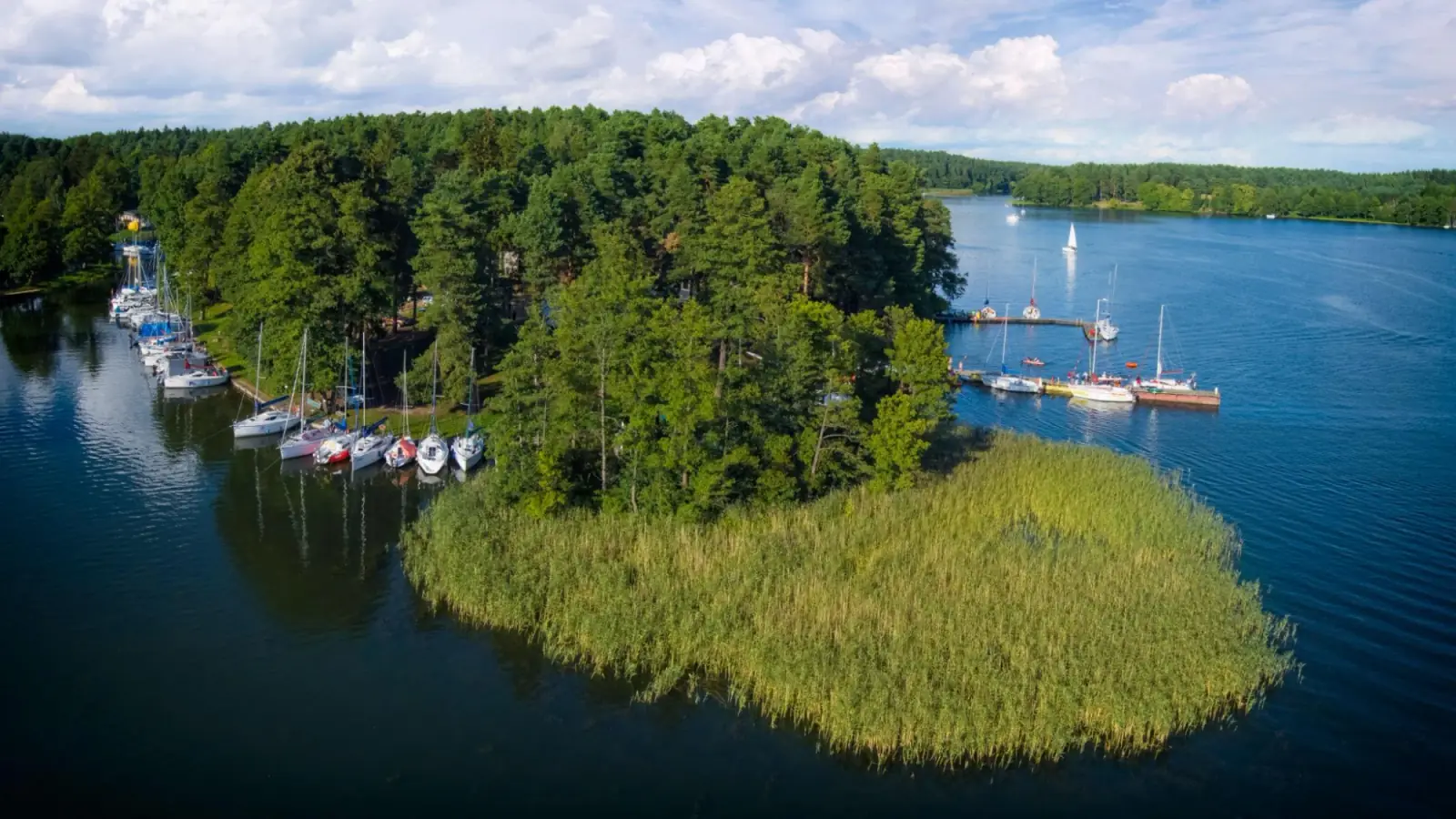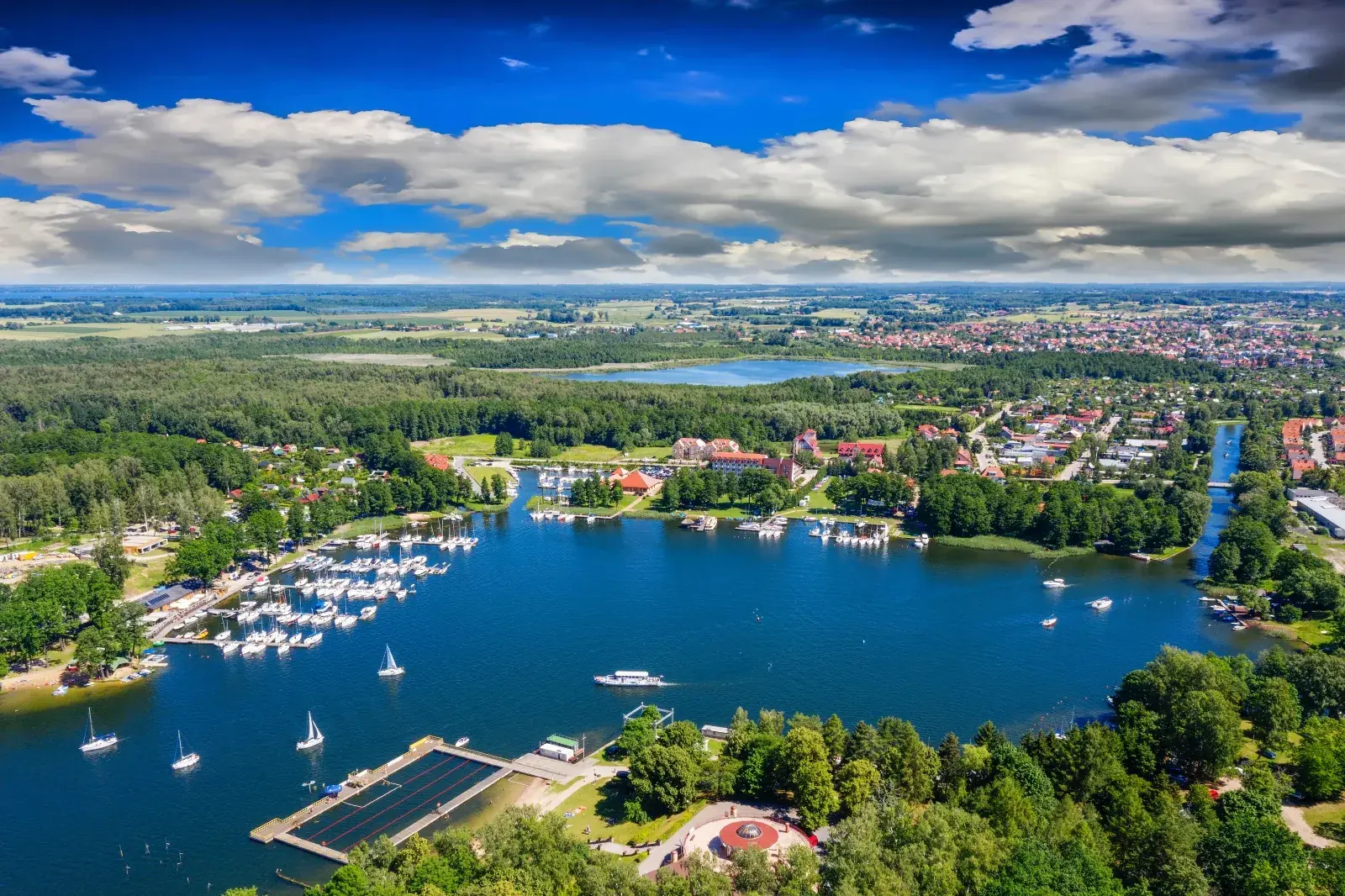
If any town can be called the symbol of sailing in Masuria, Giżycko is certainly very high on the list. Set between the great Masurian lakes, crossed by canals and full of harbours, in summer the town lives almost to the rhythm of yachts coming and going.
But Giżycko is much more than the place where another voyage begins. In a single day you can walk along the shore of Lake Niegocin, watch a historic swing bridge being opened by hand, walk through the massive walls of Boyen Fortress, climb a water tower more than a hundred years old, and in the evening sit on the waterfront and watch the sun disappear over the lake.
The contrast between history and modern Masuria is Giżycko's greatest strength. 19th-century fortifications stand a few minutes from modern marinas, and an old canal lets dozens of boats through every day as they travel the Great Masurian Lakes trail.
Giżycko can be lively, sporty and full of energy. Yet you only need to walk a little way from the harbour to find quieter paths, forest and water. That is probably why so many people come back here every summer.
01Giżycko: a town built between lakes
Giżycko's location is one of the main reasons for its importance to tourism. The town lies between Lake Niegocin and the Mamry lake system, which includes Lake Kisajno. Between Niegocin and Kisajno runs the Łuczański Canal, more than two kilometres long.
In practice this means Giżycko sits right on one of the most important waterways in Masuria. For sailors it is a natural stop on a journey around the Great Lakes. You can sail in from the south, moor in one of the harbours, visit the town, stock up and the next day sail on towards the northern lakes.
But even people who have never stood at the helm of a yacht will soon notice that water here is more than a tourist attraction. It is part of the town. In season, just stand by the Łuczański Canal for a few minutes and watch the boats pass to see how important sailing remains for Giżycko.
02Lake Niegocin: one of the places that define Giżycko
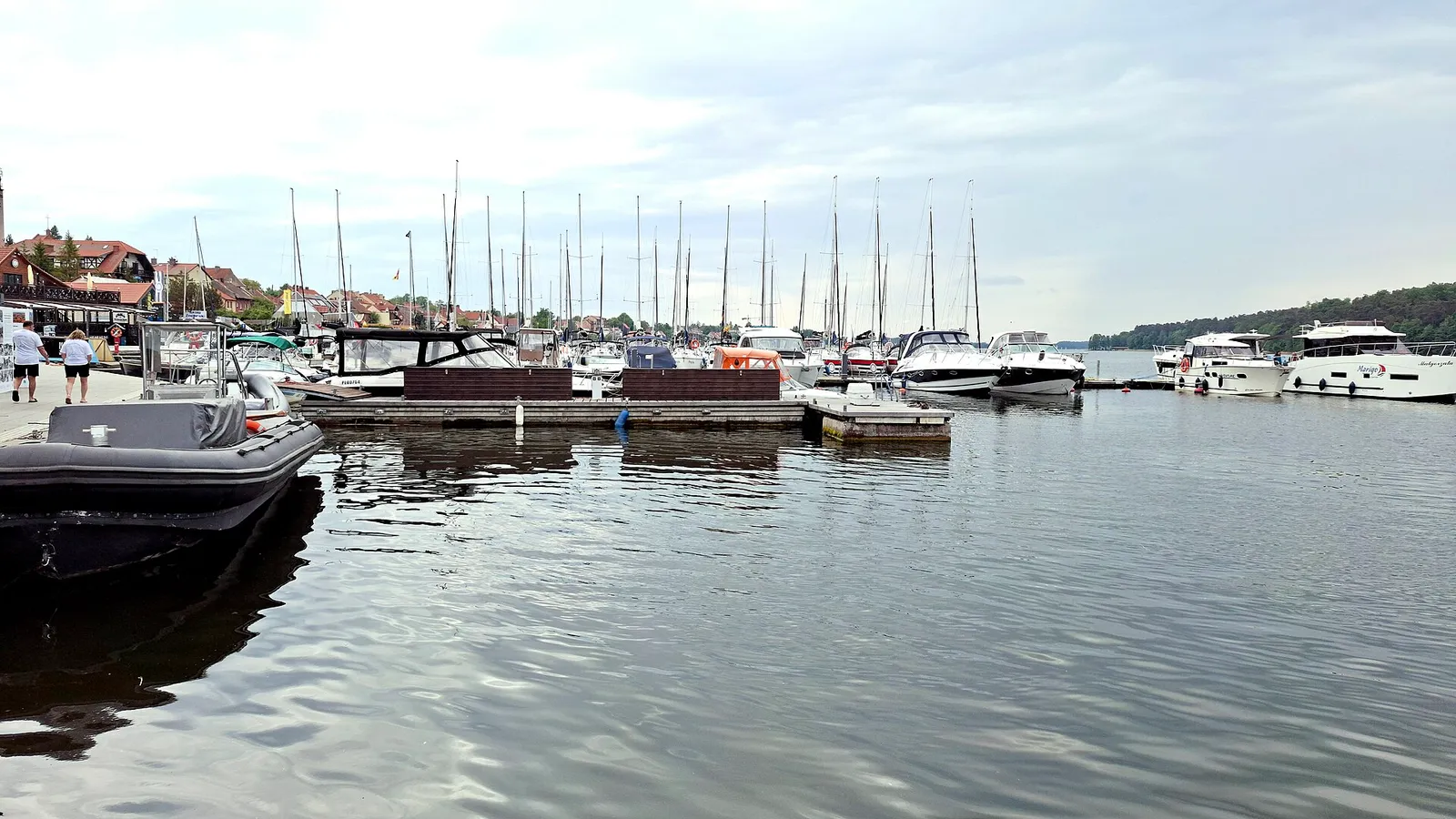
The town's most characteristic views are linked to Lake Niegocin. This is where the harbours, the town beach, the pier and the promenade along the waterfront open out. Here too is the Harbour Promenade (Pasaż Portowy), with a footbridge and an elevated walkway over the water leading to a viewpoint above the lake.
In summer the scene changes almost constantly. In the morning the harbours start to wake up. Some crews get their yachts ready to sail, others are only just returning to town. Later sailing boats, motorboats and passenger boats appear on the lake.
In the evening everything slows down. The waterfront becomes a place for strolling, and the surface of Lake Niegocin reflects the lights of the town and the moored boats. It is one of those places where you really do not need to go sightseeing. Sometimes it is enough to find a bench or a bit of jetty and simply look at the lake.
03Giżycko's harbours
Giżycko shows its sailing side most strongly around its harbours. The town's modern tourist facilities include the Ekomarina harbour, the town shore of Lake Niegocin, the Harbour Promenade, the pier and marinas in different parts of town. All of them appear in the town's official list of its main attractions.
In summer the harbour here is not just a car park for yachts. It is really a separate part of town life. People meet on the waterfront, crews prepare their boats, someone is returning from a cruise of several days, someone else is just starting their first adventure in Masuria.
Even if you do not plan to sail, it is worth walking along the harbours. Giżycko looks its best precisely when you see it from the water side.
04The town beach on Lake Niegocin
Not everyone comes to Masuria to spend all day on a yacht. Giżycko also has a town beach on Lake Niegocin. It is sandy, public and free, and in season there is a lifeguarded bathing area. Water sports equipment can also be hired at the beach.
It is a good example of why Giżycko works well for family trips. One person may want to sail, another to visit Boyen Fortress, and the children to spend a few hours by the water, and you do not need to go far out of town for any of it.
05The swing bridge: one of Giżycko's most unusual attractions
If you had to name one small structure that has become a symbol of the town, it would probably be the swing bridge over the Łuczański Canal. It stands near the old castle and crosses the canal linking Niegocin with Kisajno.
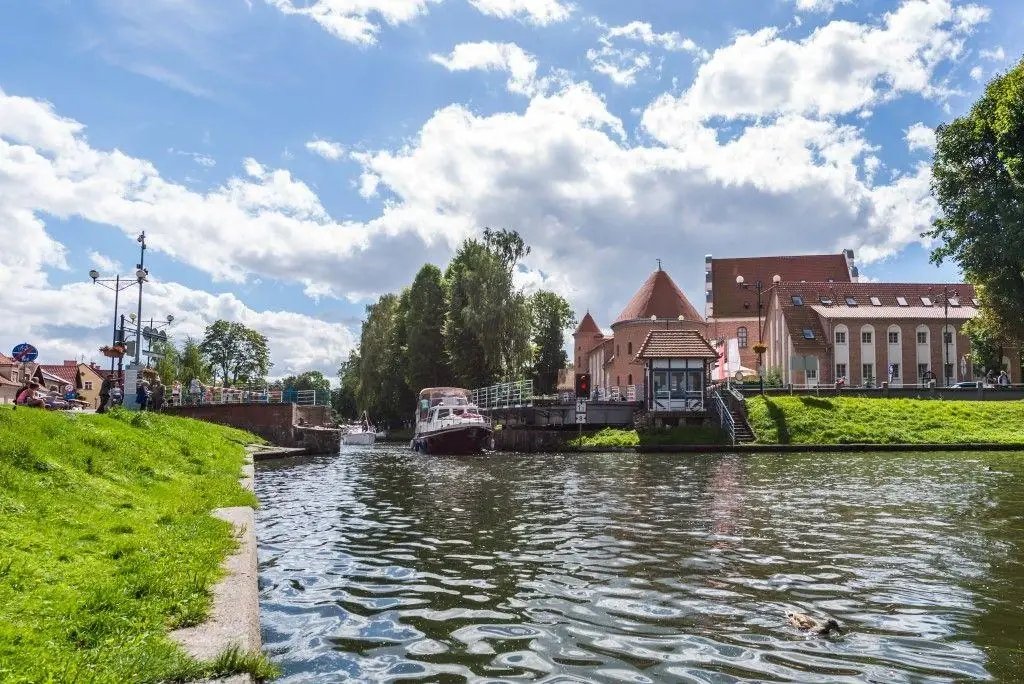
Today's bridge dates from the end of the 19th century. Its steel span is about 20 metres long and 8 metres wide and weighs almost 100 tonnes. The most interesting thing, though, is that thanks to a cleverly designed mechanism it can be operated by hand.
The moment the bridge opens has become one of the town's attractions. When boats approach, road traffic is stopped and the whole span swings aside so the boats can pass along the canal. For a moment ordinary road infrastructure turns into a demonstration of 19th-century engineering.
Visitors gather around, phones and cameras come out, and a moment later another yacht sails through the middle of town. It is a small detail, but it shows Giżycko's character very well: here, roads and waterways constantly have to share the same space.
06The Łuczański Canal: the town's water street
The Łuczański Canal itself is worth treating as an attraction too. It is about 2.13 kilometres long and links Niegocin with Kisajno. It forms one of the boundaries of the so-called Giżycko Island, the part of town surrounded by lakes and canals.
In summer the canal sometimes looks like a street of water. Boats pass one after another, and people walking along the bank watch the whole sailing spectacle from a few metres away. That gives even a walk between Giżycko's attractions a completely different feel from an ordinary town.
07Boyen Fortress: a mighty fortress hidden between the lakes
If Giżycko is associated above all with sailing, Boyen Fortress shows a completely different side of the town. It is a huge 19th-century fortification complex built on the strategic isthmus between lakes Niegocin and Kisajno.
Construction began in 1843, and the fort was built to secure an important isthmus between the Masurian lakes. The design called for an earth-and-brick fortress on a hexagonal plan. The fortress was surrounded by a Carnot wall more than 2.3 kilometres long.
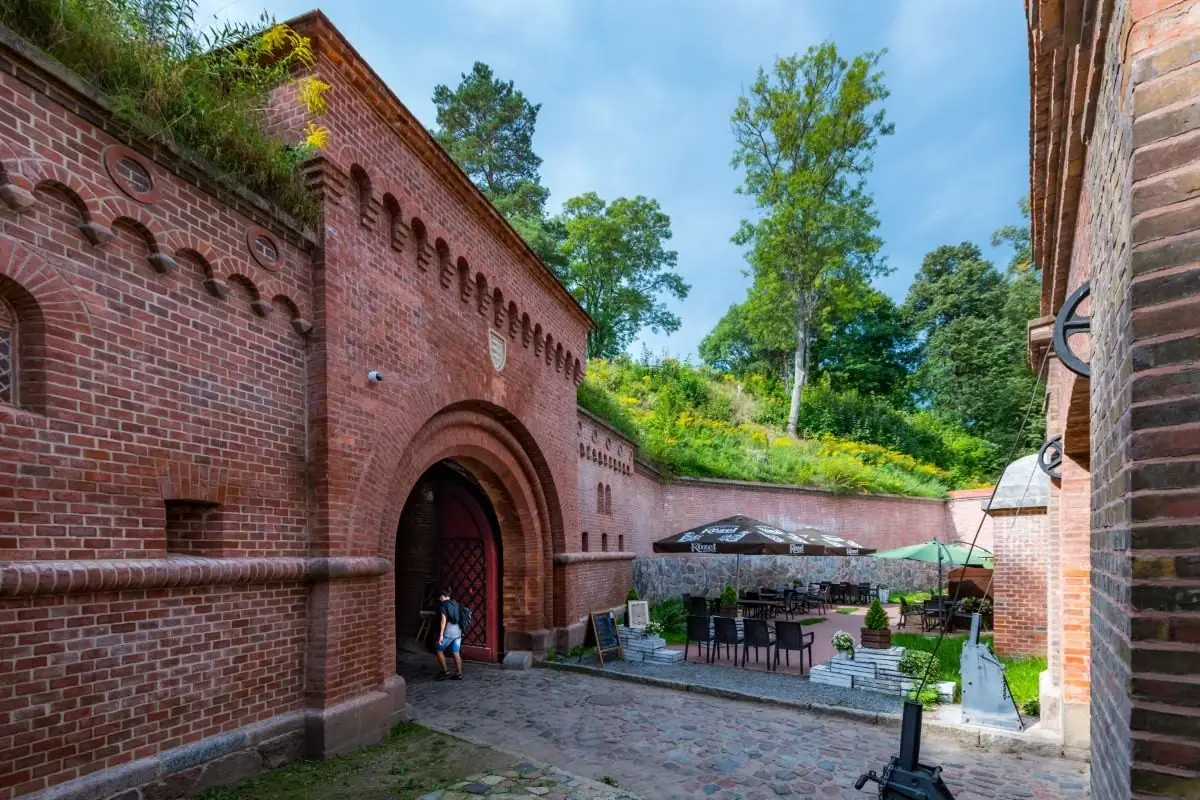
The scale of the place only really sinks in once you are inside. It is not a single building. The fortress is a sprawling complex of ramparts, barracks, gates, stores and other military buildings. You can walk between brick buildings and earthworks, trying to imagine how the whole system worked when it was meant to stop a real enemy.
Why was such a large fortress built in Giżycko of all places? Once again, the answer lies on the map. Giżycko sits on a narrow strip of land between the great lakes, and in the 19th century that gave it great strategic importance. The fortress was meant to block the passage between the lakes and protect an important isthmus against a potential attack from the east.
Today exactly the same location that once mattered militarily makes Giżycko one of the most important tourist spots in the region.
The geography has not changed. Only the way we use it has.
08A fortress that is still alive
Boyen Fortress today is not just a monument seen from behind a fence. Cultural events and historical re-enactments take place there. The town uses the vast space of the fortifications as one of its most distinctive event venues.
That is why the place does not feel like a dead museum. One day you can quietly explore one part of the fort after another, and another time the fortress fills with concerts or re-enactors.
Giżycko in numbers
- 1,612
- town charter
- 1,843
- construction of Boyen Fortress began
- 2.13km
- Łuczański Canal between Niegocin and Kisajno
- 25m
- high water tower from 1900
- 300km
- Masurian Cycling Loop
09The water tower: Giżycko from above
To see why Giżycko is so closely tied to water, it is worth looking at it from above. One of the best places to do so is the historic water tower.
It was built in 1900 of red brick in the Gothic Revival style. For 96 years it served its original purpose, supplying the town's residents with water. Today it works as a viewpoint. The tower is about 25 metres high.
From the top it is much easier to understand how Giżycko is laid out. Between the buildings appear huge areas of water, harbours and greenery. It is also a good spot for those who like photographing Masuria but do not want to limit themselves to pictures taken from the shore.
10St Bruno's Hill
Another place that lets you see the area from a slightly different perspective is St Bruno's Hill. The town lists it among its popular walking areas. There is also a point on the Masurian Cycling Loop here and facilities for resting.
It is a good choice if you want to get away from the harbours and the busier centre for a while. Giżycko is fairly small, so getting from the busiest tourist parts of town to quieter areas does not take long.
11A history much older than leisure sailing
Although today's Giżycko is associated above all with holidays, the history of settlement in the area is much older. The town's official materials say that the oldest trace of human activity found in this part of Poland, a worked reindeer antler, is about 15,000 years old. It was discovered by Lake Popówka Mała, within today's Giżycko.
Later the area was inhabited by, among others, the Prussian Galindians. In the Teutonic period a castle was built on the isthmus between the lakes, and a settlement grew up around it. The town received its charter in 1612. For the following centuries it was known as Lötzen.
12Where does the name Giżycko come from?
The town's present name appeared only after the Second World War. At first the names Lec and Łuczany were used. In 1946 the town was named Giżycko, after the Polonised form of the surname of Gustaw Gizewiusz, a 19th-century Lutheran pastor and Masurian activist.
Interestingly, the name Łuczany did not disappear completely. It lives on in the commonly used name of the Łuczański Canal. It is one example of how the complex history of Masuria is still present in everyday language and place names.
13Masuria under sail
Giżycko's greatest attraction is of course sailing itself. The town is in a place from which you can head south as well as towards the northern lakes.
You do not need your own yacht, though. There are sightseeing cruises, equipment hire and all kinds of water recreation. The town's official tourist portal lists cruises, harbours, beaches and water activities as the core of what Giżycko offers.
So you can come here with no sailing experience at all and still see Masuria at its best: from the deck of a boat and from the lake.
14Giżycko for cyclists
In recent years cycling has become more and more important in Masuria too. The Masurian Cycling Loop runs through the area around Giżycko; the full route is about 300 kilometres long and circles the Great Masurian Lakes. St Bruno's Hill is one of the points on the trail.
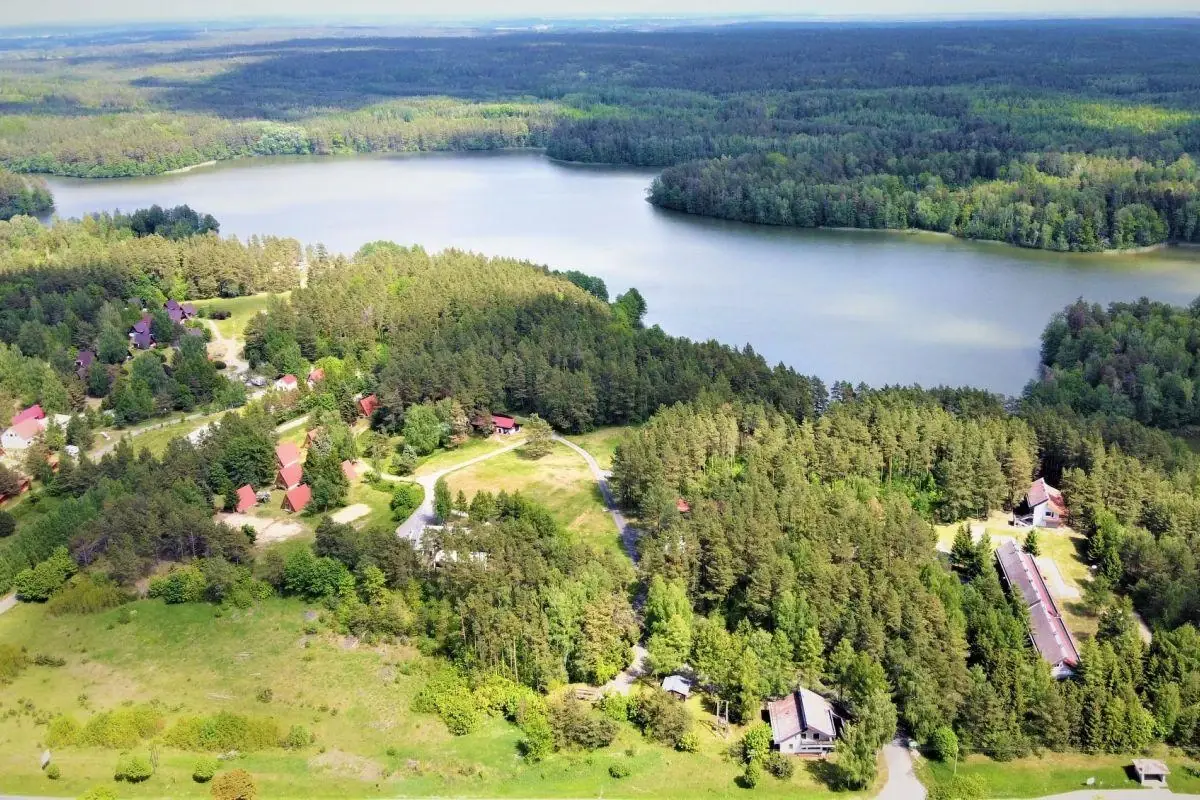
A bike lets you see a completely different Masuria from the one seen from the deck of a yacht. Instead of harbours there are small villages, forests, fields and little lakes. So it is worth treating Giżycko not only as a destination but also as a starting point.
15Giżycko for families with children
The town also works well for a family holiday. The beach, a boat cruise, a walk around the harbour or watching the bridge open are attractions that do not require hours of intensive sightseeing.
Boyen Fortress, in turn, can make history a much more tangible experience. Instead of telling children about old fortifications, you can walk between the thick brick walls and see everything with your own eyes. Being able to combine different kinds of leisure is a big advantage of Giżycko.
16What to see in Giżycko on your first visit?
If you only have one day, combine the main places into one relaxed route:
- 01start with a walk by Lake Niegocin and along the Harbour Promenade
- 02see the Ekomarina and the town waterfront
- 03walk towards the Łuczański Canal
- 04watch the historic swing bridge open
- 05visit Boyen Fortress
- 06climb the water tower
- 07come back to Lake Niegocin in the evening for the sunset
You do not have to follow the plan point by point, though. Giżycko is one of those towns where straying from your route often leads to another jetty, a small harbour or a spot by the water worth stopping at a little longer.
17Giżycko in every season
In summer Giżycko is intense. If crowds are not what you are looking for on holiday, though, consider coming outside the summer holidays.
Summer
The harbours fill with boats, yachts sail along the canal and crowds stroll by the lake. You can sail out onto the lake in the morning, go sightseeing in the afternoon and come back to the water in the evening. Especially in the middle of the holidays, expect more traffic.
Spring
The harbours are only just waking up for the season. It is quieter, and the longer days let you spend plenty of time outdoors: by the water, on a bike or on the fortress ramparts.
Autumn
There are fewer yachts, the lake shores empty and the surrounding forests change colour. Boyen Fortress surrounded by autumn greenery looks completely different from July. For photographers, cyclists and those looking for quiet, this may be the best time.
Winter
Masuria loses almost all of its holiday character, and that is exactly why it is interesting. The harbours empty, and Giżycko works more like an ordinary Masurian town than a big tourist centre.
18Giżycko as a base for exploring Masuria
The town's location means you do not have to limit yourself to Giżycko alone. From one place you can plan trips in different directions. Mikołajki shows the more resort-like side of Masuria. Ryn lets you see a medieval castle and a much quieter small town. Mrągowo offers Lake Czos and its distinctive amphitheatre.
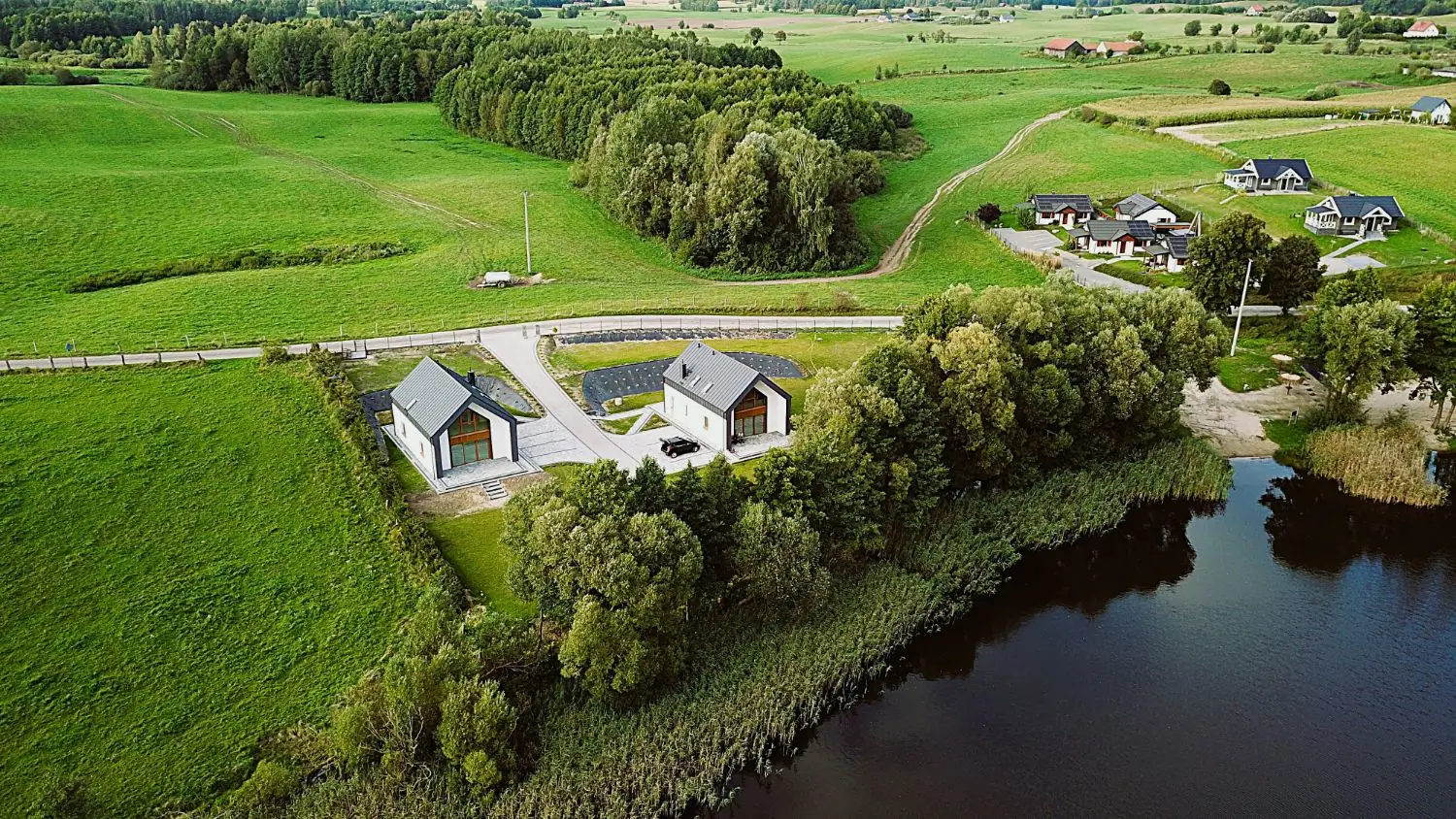
And between them are dozens of smaller villages, forests, lakes and roads that are not on the lists of top attractions. So it is not always worth taking the shortest route. In Masuria a detour can be more interesting than the destination itself.
19Why visit Giżycko?
Because it is hard to find another place where water becomes so much a part of the town. Yachts sail practically through the middle of Giżycko. A historic bridge opens to make room for them. On one side lies Lake Niegocin, on the other Kisajno and the other lakes of the Mamry system.
A few minutes away stand the massive walls of Boyen Fortress, recalling a completely different history of the same isthmus. And above it all is a town that over the years has learned to live with the water.
Giżycko can be the start of a cruise of several days. It can be a day trip. It can also be the destination for a quiet weekend without any yacht. You can come for the history, for cycling, for the lake, or simply to walk along Lake Niegocin in the evening and watch the sailing boats return to the harbour.
That is Giżycko's greatest strength: everyone can find their own way of enjoying Masuria here.