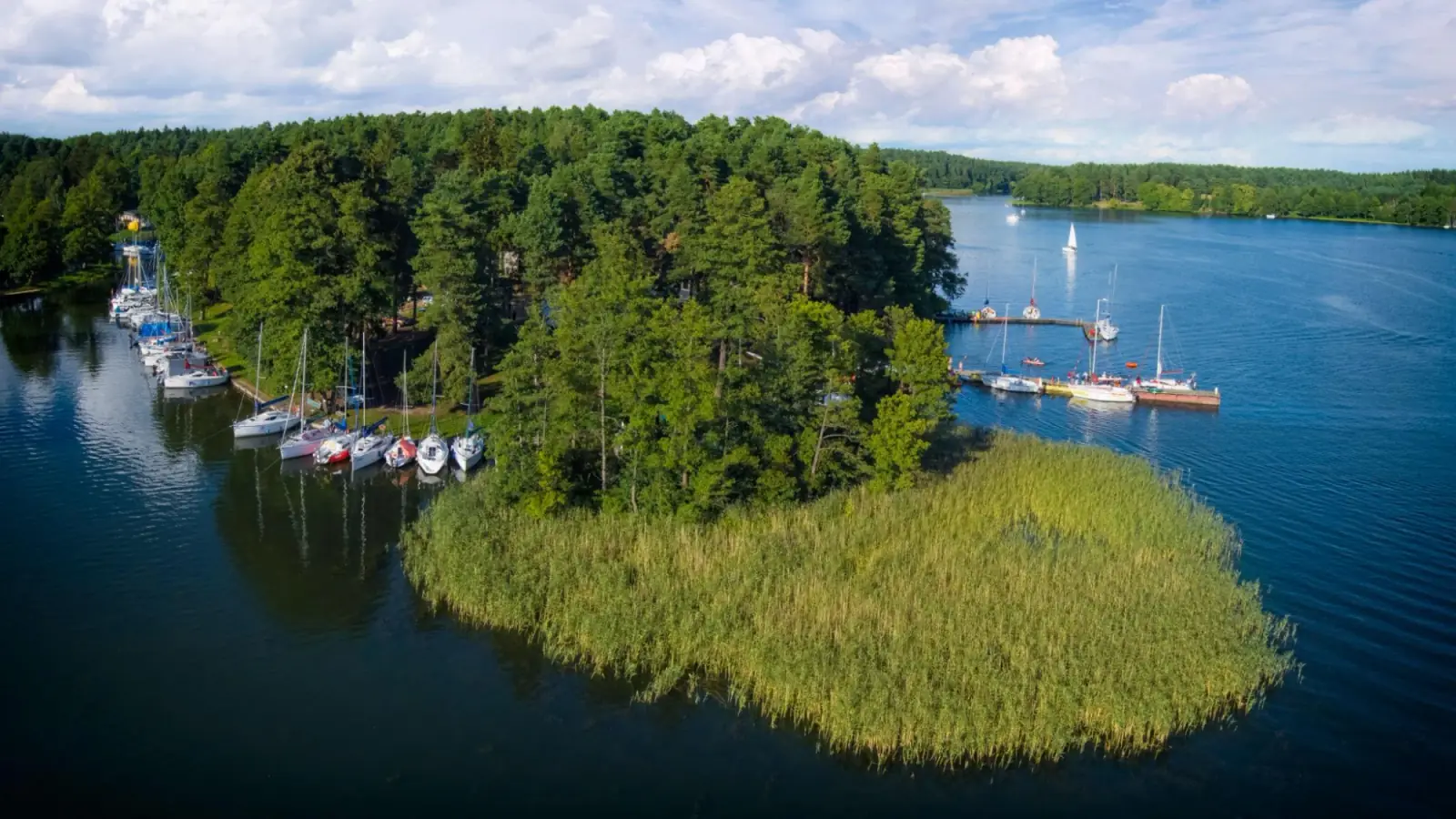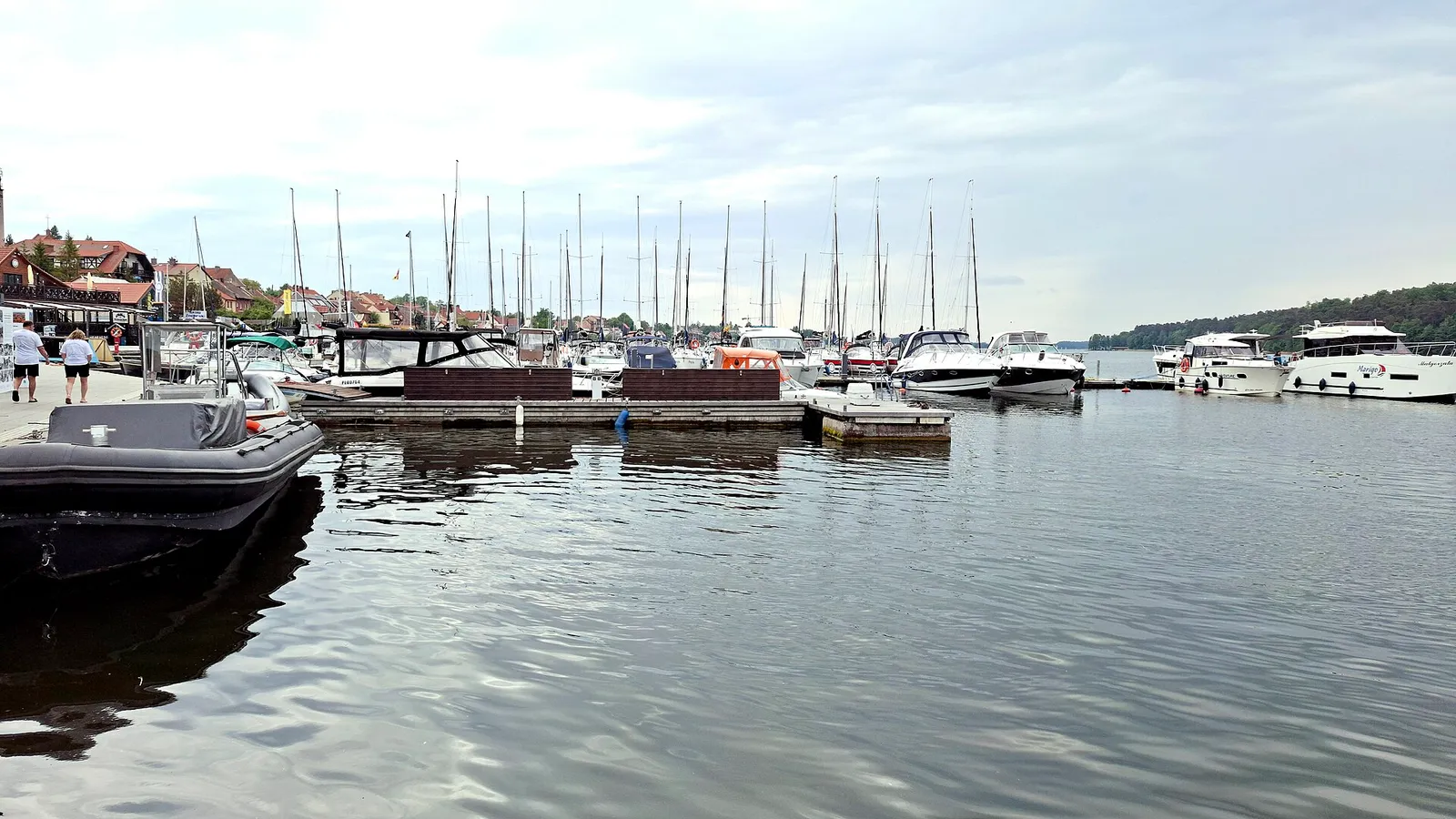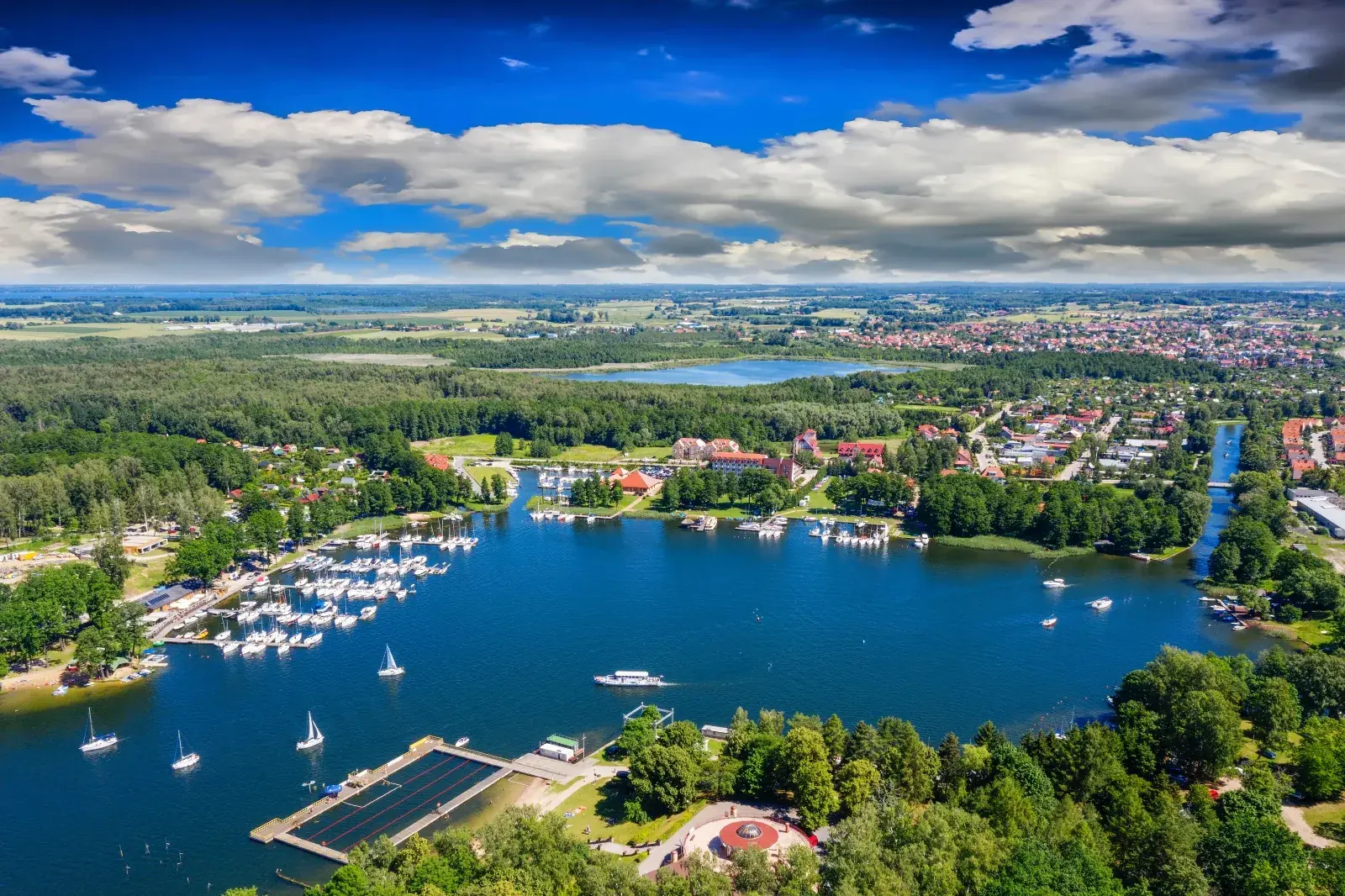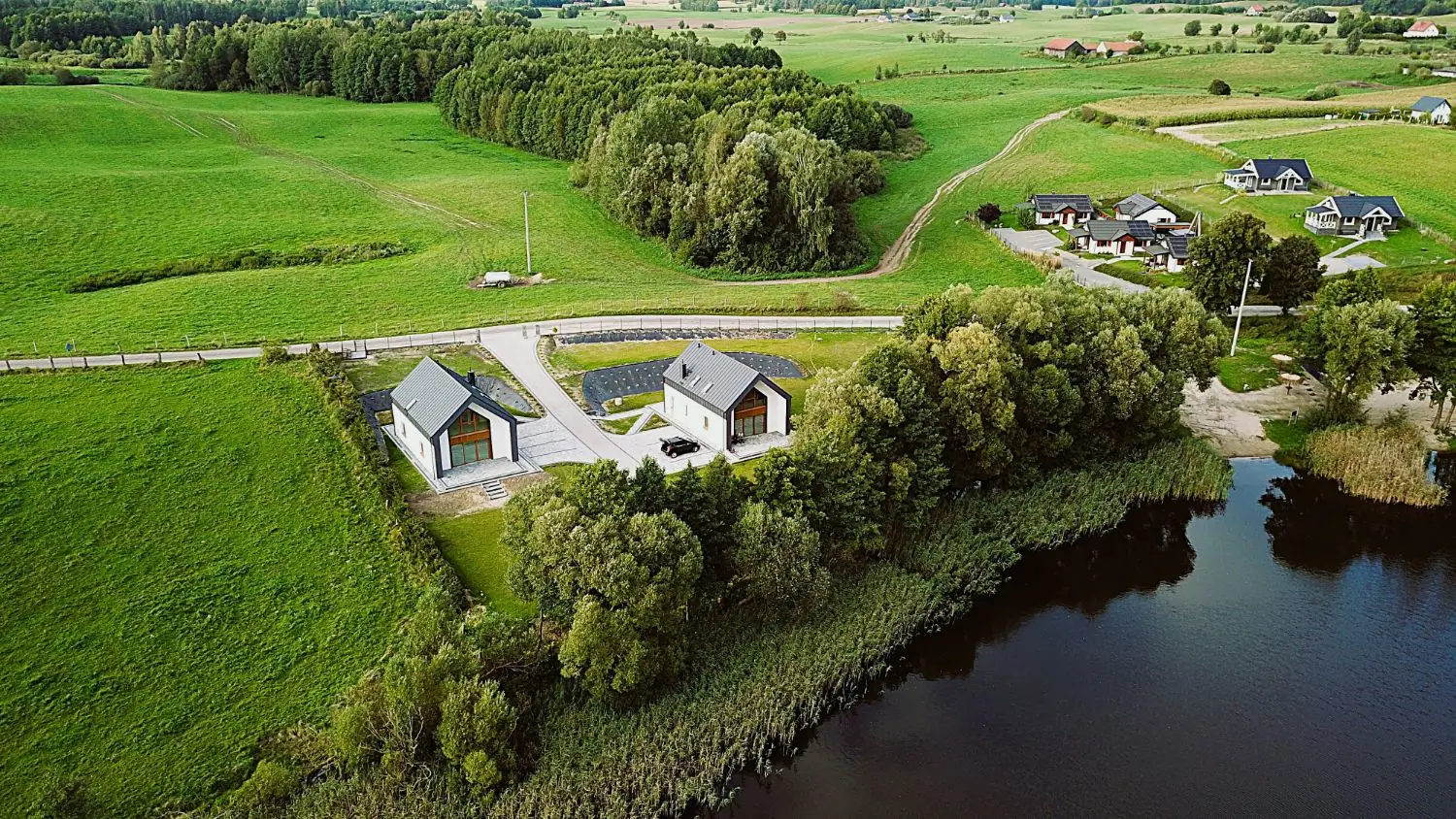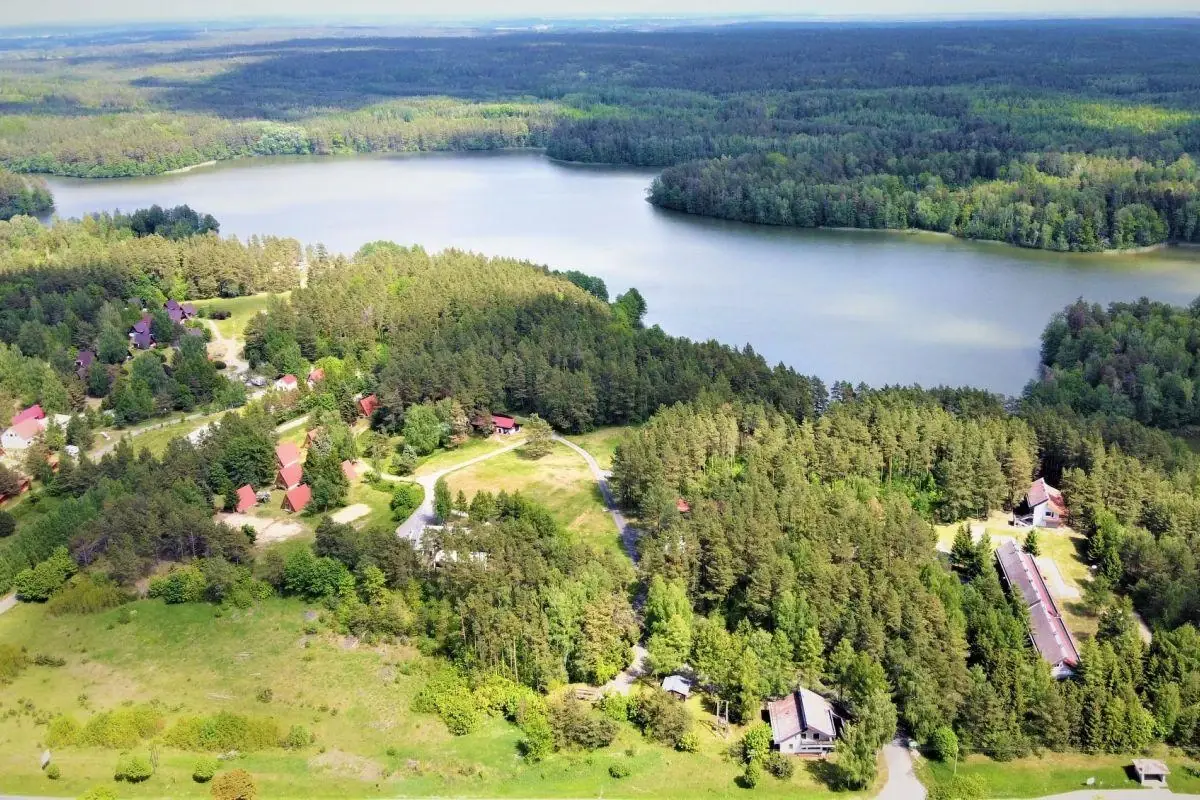
Not every place in Masuria has to have a big harbour, a promenade full of restaurants and hundreds of yachts moored along the quay. Piecki shows a completely different side of the region: calmer, more natural and much closer to what Masuria looked like before the biggest resorts grew up.
It is a village surrounded by forests, lakes and small Masurian hamlets. Nearby lies the famous Krutyń, the world of the Pisz Forest and the Masurian Landscape Park begins, and among the trees hide lakes, nature reserves, old forester's lodges and traces of centuries of history.
Piecki is not a place you come to for lively nightlife. And that is precisely its greatest strength. Here it is much easier to slow down.
You can start the day with coffee in silence, then drive to a lake, get into a kayak on the Krutynia, cycle through the forest or visit one of the small places linked to the history of the region. In the evening, instead of the bustle of a promenade, there is the lake, the forest and the Masurian sky.
Piecki is a good place for those who want to be close to the biggest attractions of Masuria, but not necessarily to stay in the middle of the tourist crowds.
01Piecki: more than 600 years of history
Although today's Piecki is associated above all with nature and relaxation, its history goes back more than six centuries. According to official municipal materials, the beginnings of Piecki date from 1401, when Ulrich von Jungingen, commander of Balga, granted land near what was then Lake Medalbern to Pieć of Muszaki. The village's name is said to come from the name Piecek or Piecio, a form of Piotr (Peter). In German times the village was called Peitschendorf.
That alone shows that Piecki is not a modern holiday village built around a lake. For centuries it was above all a farming village. Its inhabitants lived off the land, the forest and the surrounding countryside, and the rhythm of daily life was set by the seasons, the work in the fields and the conditions of Masurian nature.
Change began to speed up as transport developed. The opening of the railway line from Czerwonka to Ruciane mattered a great deal. After the First World War Piecki had three sawmills, a dairy, mills, a hotel and a cooperative bank. The war, however, brought serious destruction and depopulation.
Today it is hard to see all the traces of that world, but the history of Piecki is one example of how much Masurian villages changed in the 20th century.
02Masuria without the crowds
Piecki's greatest advantage over the bigger resorts is its scale. There is no large tourist centre here, no huge harbour and no promenade that in midsummer resembles a seaside boardwalk. Instead there are forests, fields, small roads between villages and lakes where you can still find quiet spots.
It is a completely different kind of holiday. That does not mean being completely cut off from civilisation, of course. Piecki is the seat of the municipality and a local centre for the surrounding villages. At the same time it remains a good starting point for trips to different parts of Masuria.
The municipality borders the areas of Mrągowo, Mikołajki, Ruciane-Nida, Sorkwity and Świętajno, so a stay here is easy to combine with exploring a larger part of the region.
03Lake Wągiel: water right next to Piecki
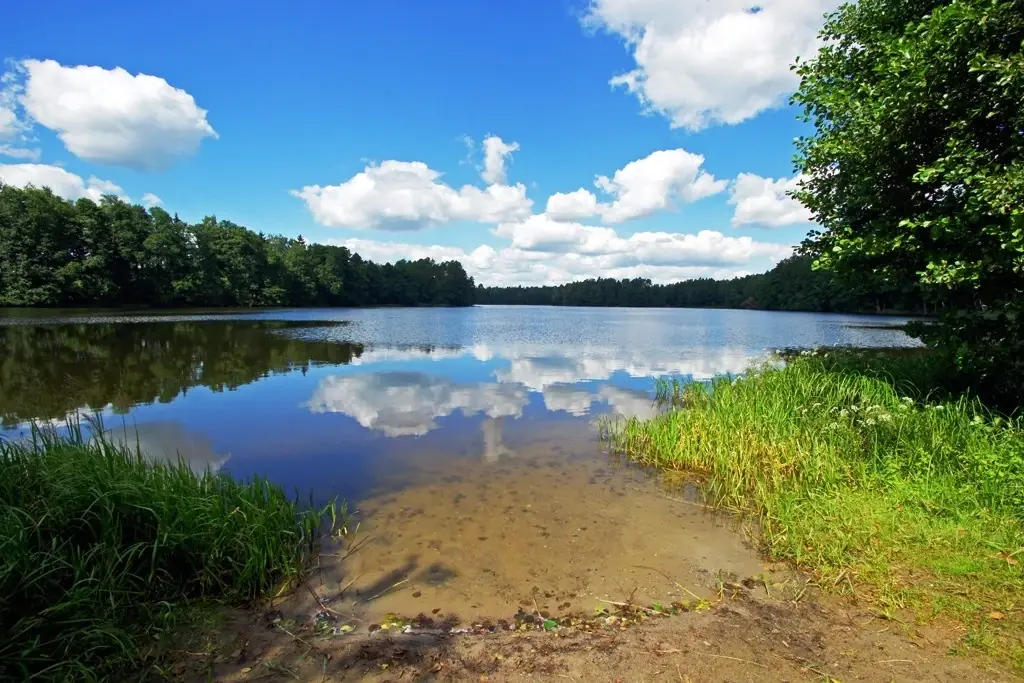
One of the most characteristic lakes directly linked to Piecki is Lake Wągiel. The area around it shows the landscape typical of this part of Masuria well: water surrounded by forest, few buildings and a much calmer atmosphere than on the lakes right on the main Great Masurian Lakes trail.
You will not see the kind of boat traffic here that you find on Lake Niegocin in Giżycko or Lake Mikołajskie. For many people that is an advantage. Masuria does not have to mean constantly moving from harbour to harbour. Sometimes the best plan for the day is to find a spot by the water, have a swim, read a book and spend a few hours without looking at the clock. The area around Lake Wągiel is well suited to that.
04Krutyń: a few kilometres and you are in a completely different world
One of the greatest treasures of the Piecki municipality is Krutyń. The small village has become one of the best-known places for kayaking in Masuria. The Krutynia river, flowing through the area, forms an extensive waterway together with the lakes. The municipality's strategy documents name the Krutynia river as one of the most important attractions of the area.
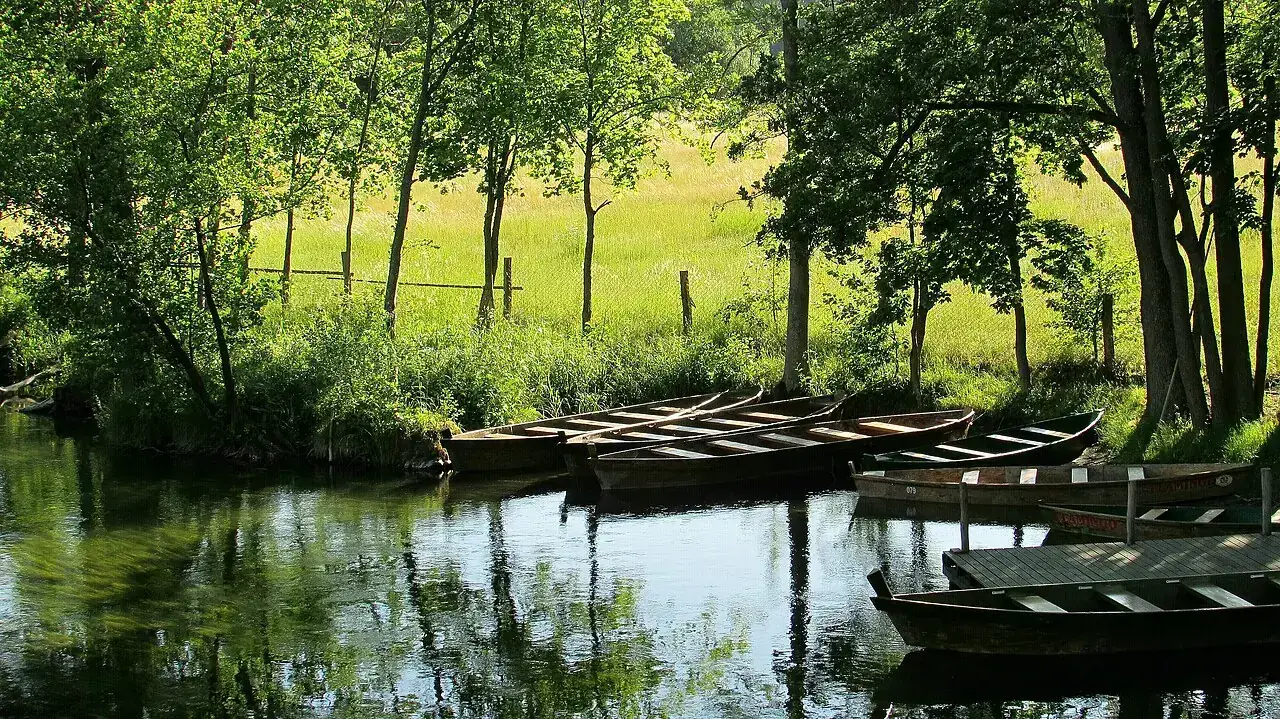
The river's greatest strength is that it lets you discover Masuria completely differently from a car. A kayak moves slowly. You cannot rush past the most beautiful spot in a few seconds. You pass the forest inch by inch, glide past reeds and fallen trees, watch birds and fish and the changing riverbed.
That is why, for many people, a kayak trip on the Krutynia becomes one of the most memorable moments of their whole stay in Masuria.
05A Krutynia kayak trip does not have to be an expedition for experts
You do not have to plan a multi-day expedition straight away. There are stretches of different lengths in the area. The municipality's documents describe routes such as Krutyń-Nowy Most, Krutyń-Iznota, Zgon-Krutyń and Spychowo-Krutyń. That lets you fit a trip to a whole day or a shorter outing.
It is an especially good option for families or people getting into a kayak for the first time. After all, it is not about covering as many kilometres as possible. On the Krutynia it is worth paddling slowly.
06The Masurian Landscape Park: nature takes centre stage
Krutyń is also the seat of the Masurian Landscape Park. It is one of the largest landscape parks in Poland. It covers the northern part of the Pisz Forest, a stretch of the Krutynia trail and the area around Poland's largest lake, Śniardwy. More than 150 kilometres of nature trails and cycling routes have been laid out within it.
This is where you can see best that the area around Piecki is far more about nature than a classic resort. You do not need to look for a spectacular attraction. The landscape itself is the attraction. Forest. Lake. River. A path between old trees. A jetty hidden among the reeds.
And the chance to cycle a few kilometres without having to go through a busy town.
07Królewska Sosna, Zakręt and other reserves
There are several nature reserves in the Piecki municipality. Municipal documents list Zakręt, Strzałowo, Królewska Sosna (the Royal Pine), Krutynia and Pierwos among them.
The area around the Królewska Sosna reserve and Lake Mokre is particularly interesting. Walking and cycling trails lead through it, letting you explore the wilder side of Masuria. One of the official trails of the Masurian Landscape Park runs from Krutyń along Lake Mokre, through the Królewska Sosna reserve and on towards Pranie.
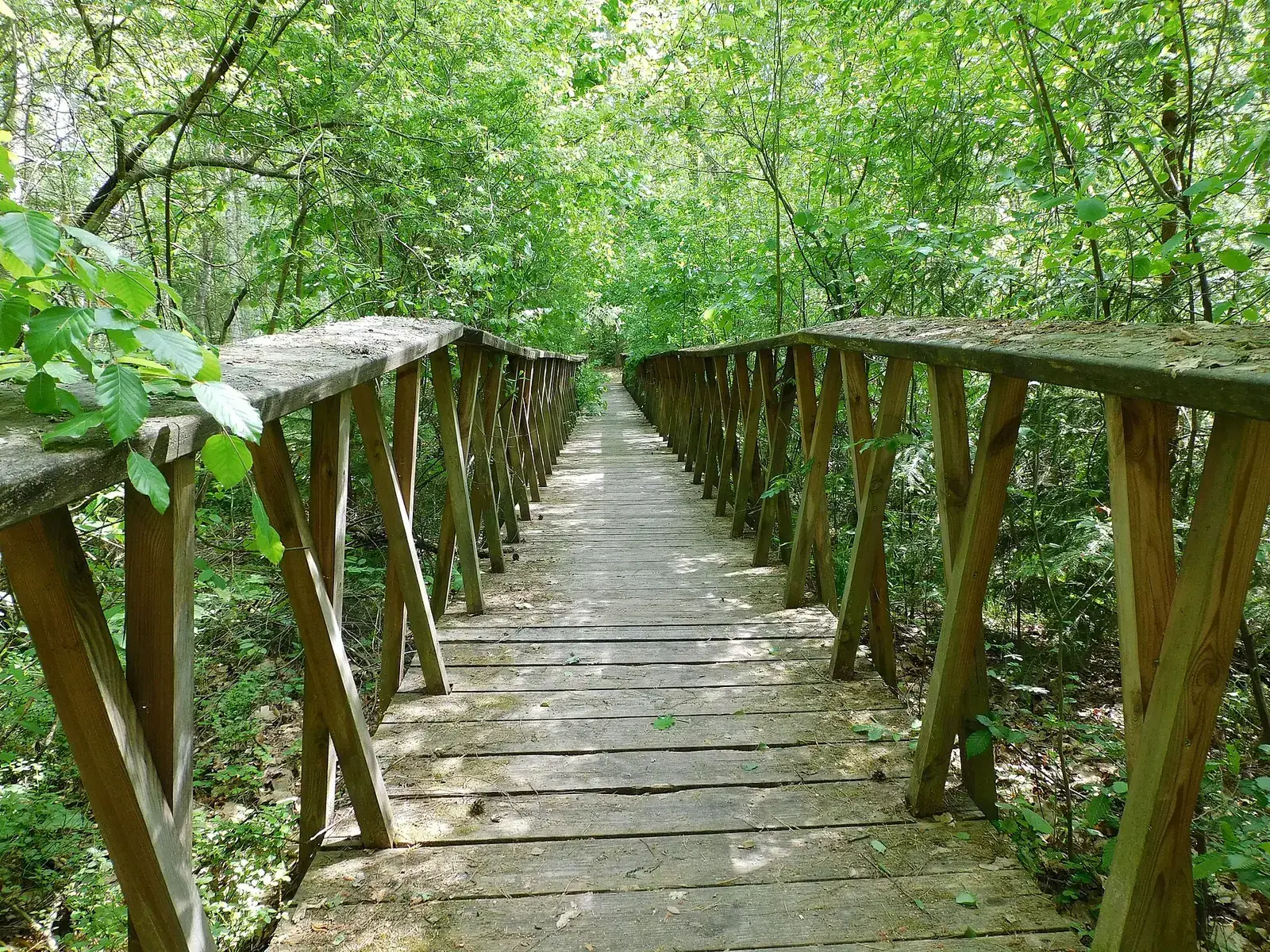
In places like these the greatest luxury is the absence of buildings. Kilometres of forest can cut you off from everyday life more effectively than the most luxurious hotel.
08The Regional Museum in Piecki: one of the most unusual collections in Masuria
In Piecki itself there is a place you should definitely not miss: the Walentyna Dermacka née Sapieha Regional Museum. The museum is housed in the former home of Walentyna and Maria Dermacka, who came up with the idea for it. Walentyna Dermacka settled in Piecki in 1958 and began collecting objects linked to folk culture and the life of the region.
The most distinctive part of the collection is thousands of ceramic figurines. They were made by the well-known folk artist Władysława Prucnal from Medynia Głogowska. The figurines show, among other things, the inhabitants of an old village, traditional work, customs, costumes, and religious, historical and literary figures.
That may not sound like much. Once you are there, though, the small ceramic figures turn out to tell a huge story about a world that has all but disappeared.
09An old village captured in clay
The collection includes whole scenes of village life. There are series on bread baking, pottery and the everyday chores of the villagers. Besides ceramics, the museum also has old furniture, dishes, household tools and works by other folk artists.
That makes it especially interesting right here. After a whole day by the lake or in the forest, you can see what life was like for people for whom the same landscape was not a holiday destination but home and a place of work. The museum lets you look at Masuria a little more deeply.
10Piersławek and Ernst Wiechert
A few kilometres from Piecki is another unassuming place: the Piersławek forester's lodge. The German writer Ernst Wiechert, whose work was closely tied to the Masurian forests and landscape, was born here in 1887. The building dates from 1883 and was the official home of his father, the forester Martin Wiechert.
Since 1996 it has housed the Ernst Wiechert Forest Memorial Room, with documents, letters, publications and keepsakes linked to the writer. A nature trail about 3.8 kilometres long also starts at the lodge.
It is a good place for people who are not looking for classic tourist attractions. There is the forest, an old forester's lodge and the story of a man whose childhood was inseparable from Masurian nature.
11Here Masuria is best explored by bike
The area around Piecki is perfect for bike rides. And not just on paths alongside the main roads. Many routes have been laid out through the forests, along the lakes and through small villages.
One of the more interesting is the Ernst Wiechert Trail, running from Krutyń through Piersławek and Lipowo and back to Krutyń. The current route is about 34.5 kilometres long and follows mainly forest tracks, farm tracks and quieter tarmac roads.
It is on rides like these that you start to see Masuria completely differently. Not as a collection of a few well-known towns, but as a vast area full of forests, lakes and small villages.
12Nawiady: another trace of the region's past
Not far from Piecki lies Nawiady. One of the village's most important monuments is St Joseph's Church. According to the municipality, the Gothic church dates from 1437. After the Reformation it served as a Lutheran church, and today it is Catholic. Its wooden tower dates from 1687.
The interior has also kept interesting pieces of its old furnishings, including a Baroque altar and a baptismal angel holding a bowl.
There are many more small churches, cemeteries and traces of old buildings like these in Masuria. They often stand away from the main tourist routes, so you discover them a little by chance.
The Piecki area in numbers
- 1,401
- beginning of the history of Piecki
- 1,437
- Gothic church in Nawiady
- 1,887
- Ernst Wiechert born at Piersławek
- 150km+
- of trails in the Masurian Landscape Park
- 34.5km
- Ernst Wiechert cycling trail
13Piecki and archaeology: a history much older than the medieval village
The history of people living in today's municipality did not begin in the 15th century, though. North of Piecki a burial ground was discovered with cremation graves, bronze ornaments, fragments of a bone comb, pottery and burnt human bones. The finds date the cemetery to around AD 525-600.
That is more than eight hundred years before Piecki was founded. Interesting archaeological sites have been found in other parts of the municipality too. The Masurian landscape we now associate with holidays was home to one community after another for thousands of years.
14Piecki for families with children
The area works well for a family trip precisely because you do not have to come up with a big attraction every day. One day you can go to the lake. The next, choose a short stretch of river by kayak. The day after, visit the museum in Piecki, which also runs workshops, including clay modelling.
The next day you can simply walk into the forest. For children this is often more interesting than another hour of touring a historic building.
15Piecki for those looking for peace and quiet
Some people want everything at hand on holiday: restaurants, clubs, shops, a promenade and a harbour. For them Mikołajki or Giżycko may be the better choice.
But if the greatest value of your trip is to be silence, Piecki and the area around it start to have a huge advantage. Just drive a little way off the main road. The traffic disappears. The forest appears. Sometimes a few hundred metres further on there is already a lake.
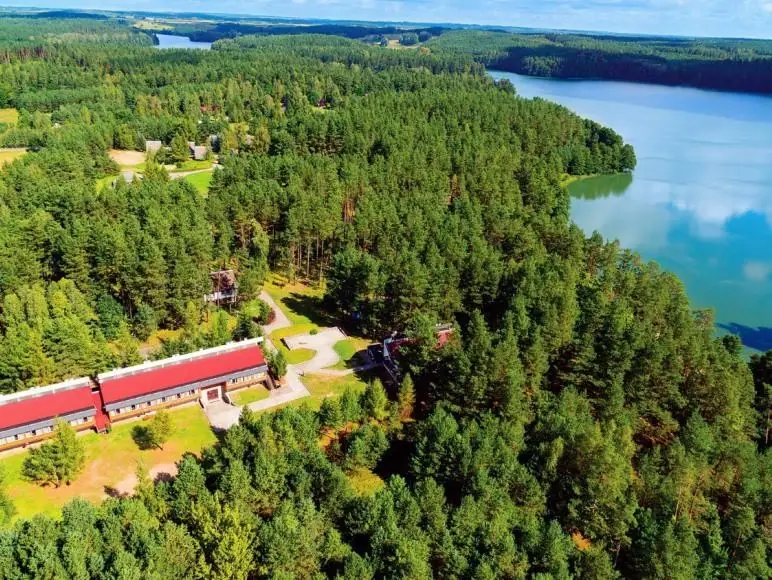
And this kind of Masuria is getting harder and harder to find in the busiest towns.
16Piecki in every season
Masuria is at its most beautiful early in the morning and late in the evening. That is when the water calms, the light softens, and most day visitors have not yet arrived or have already left. Around Piecki, though, each season has its own rhythm.
Summer
The most options: lakes, kayaking on the Krutynia, cycling and most of the day outdoors. It is also when Krutyń is at its busiest, but you do not have to visit the most popular spots in the middle of the day.
Autumn
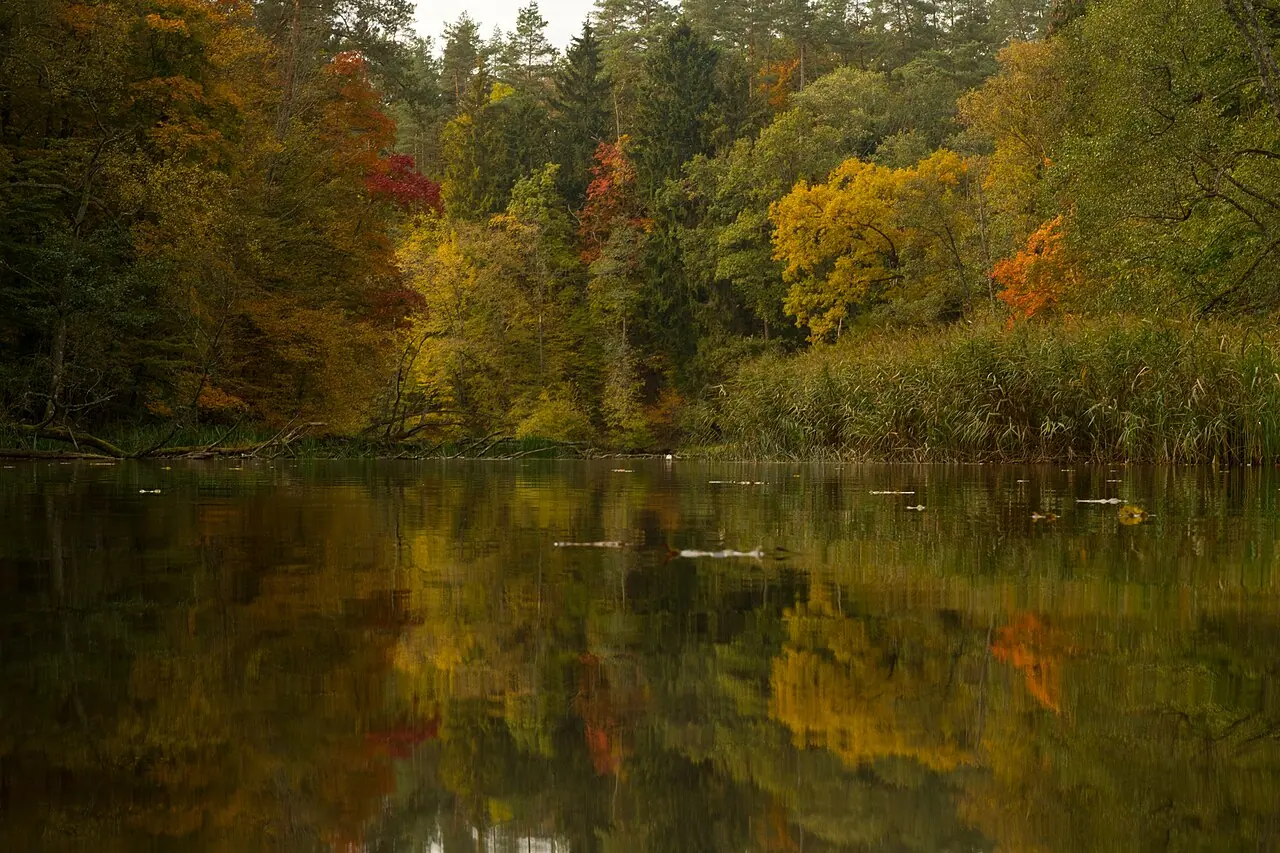
The forest takes on colour, morning mists appear over the lakes and the trails empty. There are fewer kayaks, and you can cycle for many kilometres meeting almost no one. For those looking for rest, this may be the best time.
Winter
Tourist traffic practically disappears, leaving the forest, small villages and lakes. Instead of a kayak, a long walk; instead of a harbour, a warm house and snow outside the window. Masuria then resembles the place it was for most of its history.
17A perfect base for exploring more of Masuria
One of Piecki's greatest assets is how it combines quiet with easy access to the region's better-known places. You can stay somewhere peaceful and, when you feel like a bigger town, head for Mrągowo, Mikołajki, Ryn or Giżycko.
Another day, instead of a town, you can choose Krutyń, Piersławek, Lake Mokre or one of the trails of the Masurian Landscape Park. That gives you something sometimes missing from a stay in a big resort: choice. You do not have to spend every day the same way.
18What is worth seeing in and around Piecki?
If you have a few days, combine the different sides of the area:
- 01the Walentyna Dermacka née Sapieha Regional Museum in Piecki
- 02Lake Wągiel
- 03Krutyń and a kayak trip on the Krutynia
- 04the Masurian Landscape Park
- 05the Królewska Sosna and Zakręt reserves
- 06the Piersławek forester's lodge and the Ernst Wiechert Memorial Room
- 07the historic church in Nawiady
- 08forest and cycling trails between the lakes
You do not need to work through the whole list, though. In this part of Masuria a better rule is: one trip a day and plenty of time to rest.
19Why visit Piecki?
Because it shows a Masuria that is easy to overlook when you focus only on the biggest towns. There is no large marina here. No kilometre-long promenade. No crowd of people walking through the centre all summer long.
Instead there is something else. A forest that begins almost at the edge of the village. Lakes hidden among the trees. The Krutynia flowing through one of the most beautiful landscapes in the region. Small villages. Old churches. Forester's lodges. The story of people who have lived in this part of Masuria for hundreds of years.
Piecki can be a base for sightseeing. But it can just as well be a place from which you do not need to go far for several days. A bike ride in the morning. The lake at midday. A kayak the next day. Then a walk in the forest. And silence in the evening.
This is not a Masuria that tries to impress. It is a Masuria that lets you rest.