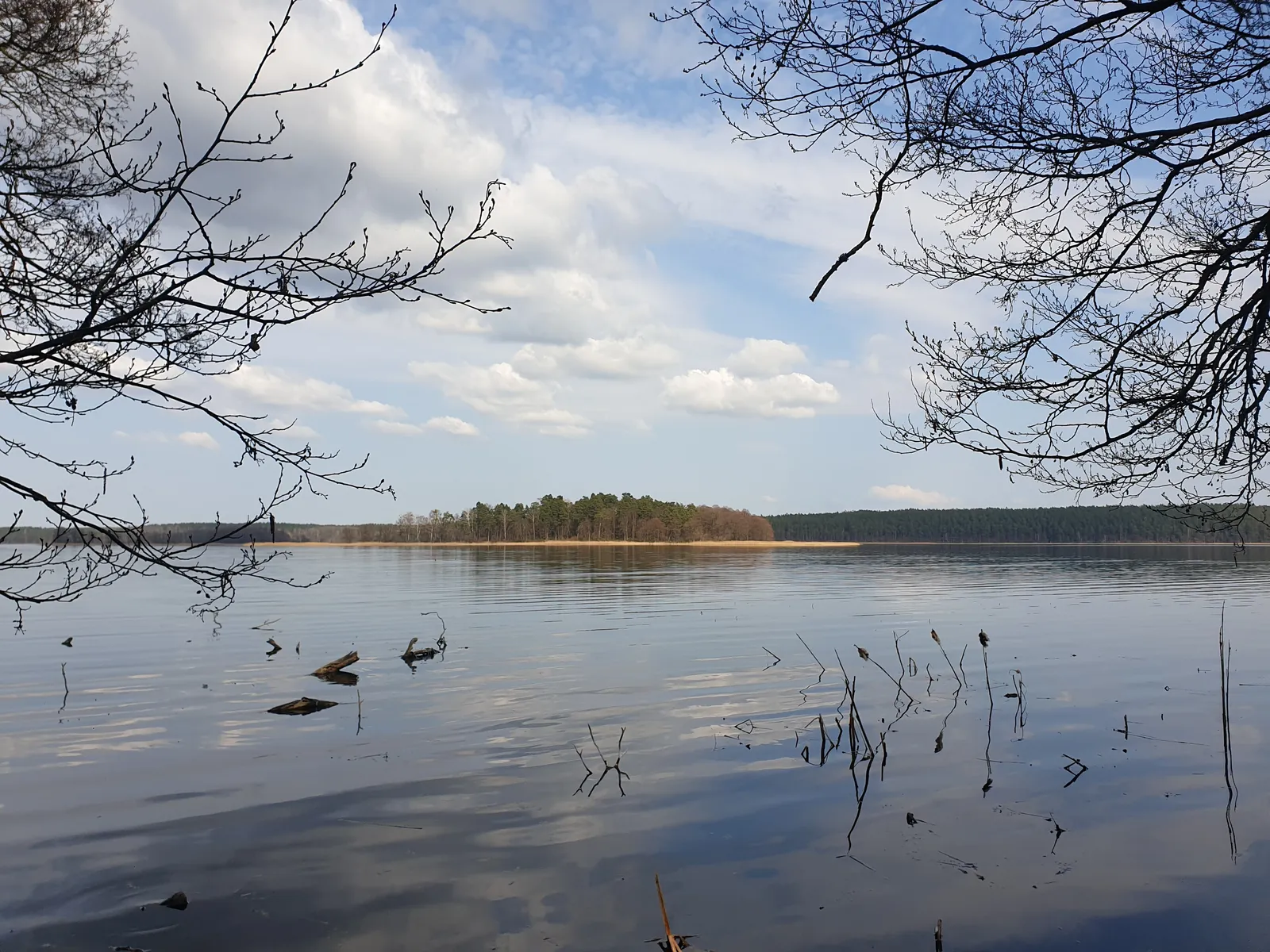
Spring does not arrive in Masuria in a single day. First the ice leaves the lakes, then the cranes start calling over the wetlands, and a few weeks later the forests turn green, the meadows go yellow with marsh marigolds and the storks return to their nests. It is a season for anyone who wants to see Masuria at its fastest change of the year, before the summer crowds arrive.
Many people know Masuria, Poland's lake district, only in July and August: sails on the lakes, busy harbours and beaches full of people. Spring shows a completely different side of the region. It is quieter, the days lengthen quickly and nature changes from one week to the next. Come in March and return in May, and you may feel you have visited two different places.
In this guide we look at what happens in Masuria month by month through the spring, where to watch birds, which trails to choose for walking and cycling, when the kayaks come out and how to prepare for changeable spring weather.
01Why visit Masuria in spring
The first reason is peace and quiet. Outside the long weekends there are far fewer people on the roads, trails and in the towns than in summer. You can walk a whole nature trail without meeting anyone and sit on a jetty without looking for a free spot.
The second reason is nature. In spring everything happens fast: the birds come back, the first plants flower and the trees come into leaf. It is a good time for wildlife watching, because the forest is not yet dense and at dawn the birds are easier to hear than at any other time of year.
The third reason is price. Outside the summer holidays accommodation costs less, and in a house of your own the terrace, the garden and the lake shore are yours alone.
A Masurian spring in numbers
- 3
- months of spring: March, April and May
- 1May
- the closed season for pike ends
- 150km+
- of trails in the Masurian Landscape Park
- 1,099PLN
- a night for the whole house in spring, from
- 10m
- from the houses to Lake Krzywe
02March, April, May: three different springs
A Masurian spring has three distinct stages, and each suits a slightly different trip.
March
The lakes slowly shake off their ice, and the meadows are still brown after the winter. The first cranes call over the wetlands, and the storks appear towards the end of the month. A time for long walks, silence and evenings in a warm house.
April
Wood anemones flower in the forests, marsh marigolds on the wet meadows, and the birches turn green. The storks settle into their nests, and at dawn the reed beds are loud. A good month for cycling and birdwatching, although the weather can change several times a day.
May
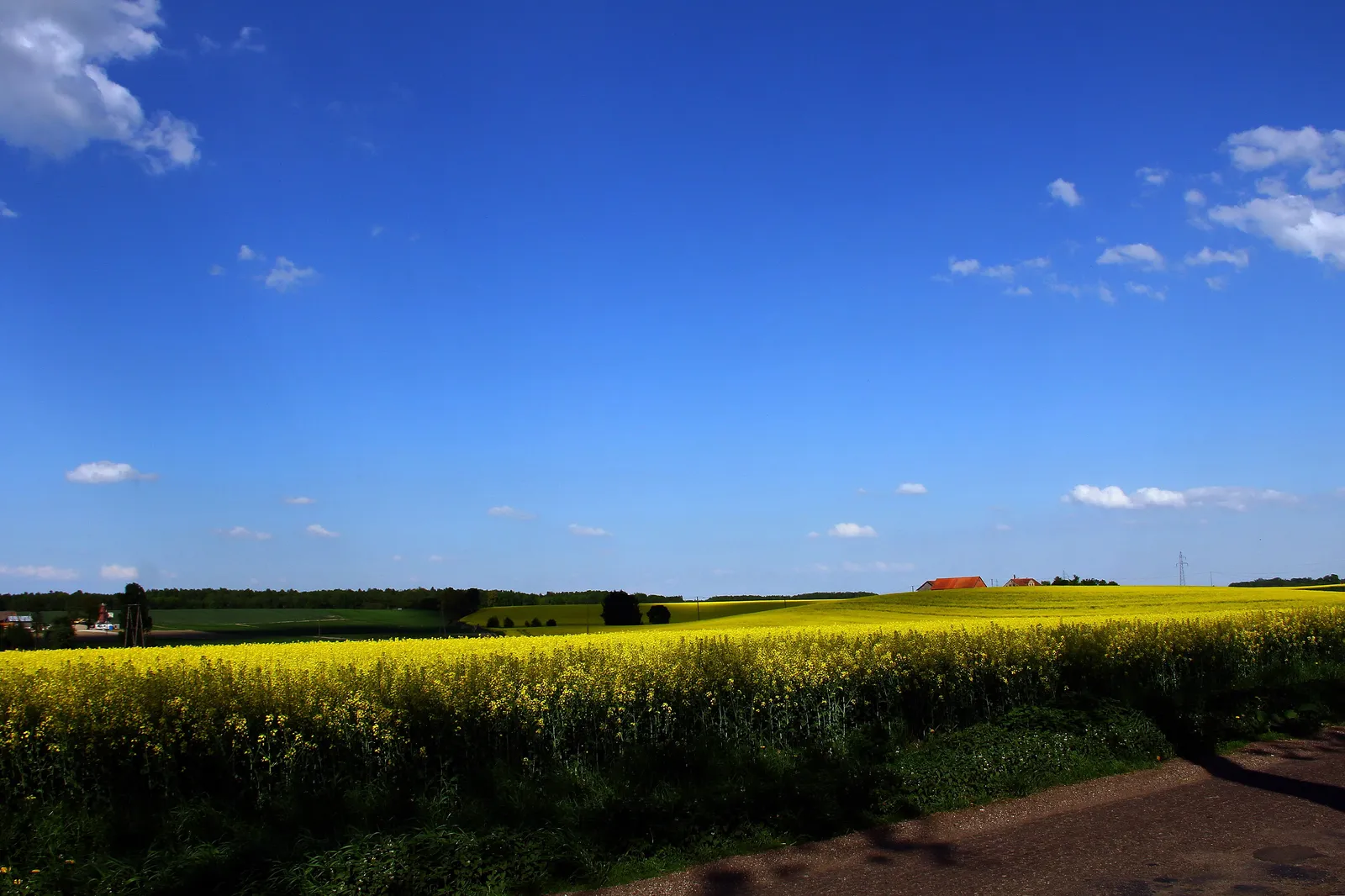
Masuria is green now, the rapeseed is in flower, and the first boats and kayaks go out on the water. The days are long, the evenings warmer, and a campfire by the lake becomes part of the daily plan again. The busiest time is the May long weekend.
03Cranes and storks: spring arrives on wings
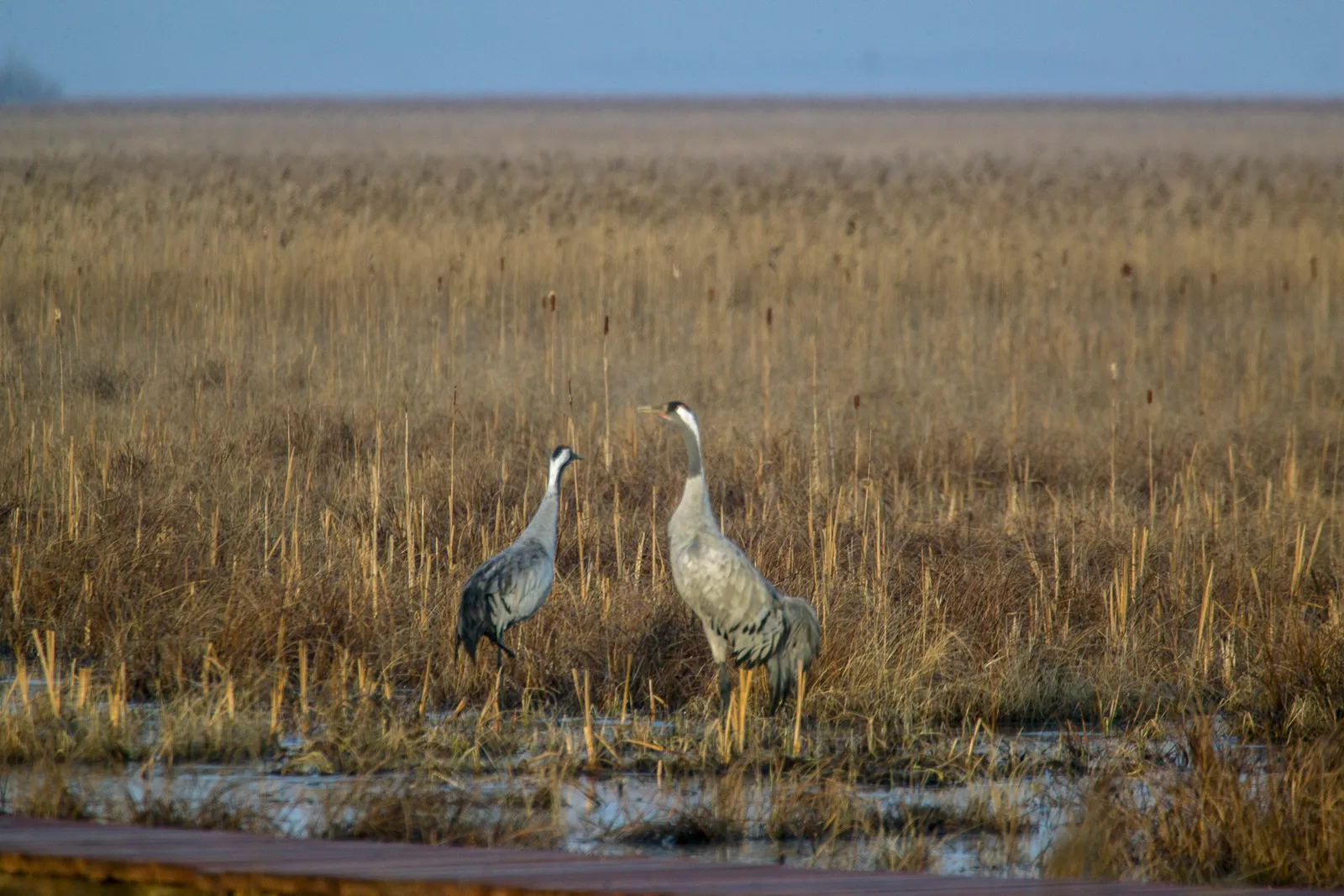
Cranes are among the earliest birds to return. They usually appear in Poland at the turn of February and March, and their passage continues through March. Their loud, trumpeting calls carry for kilometres over the wetlands, and for many people they are the first real sign of spring.
White storks arrive later. Naturalists of the past recorded their return in the second half of March, sometimes not until the first half of April, and Polish folk tradition linked it to St Joseph's Day, 19 March. The males come back first to repair the nests, and the females follow a few days to a couple of weeks later.
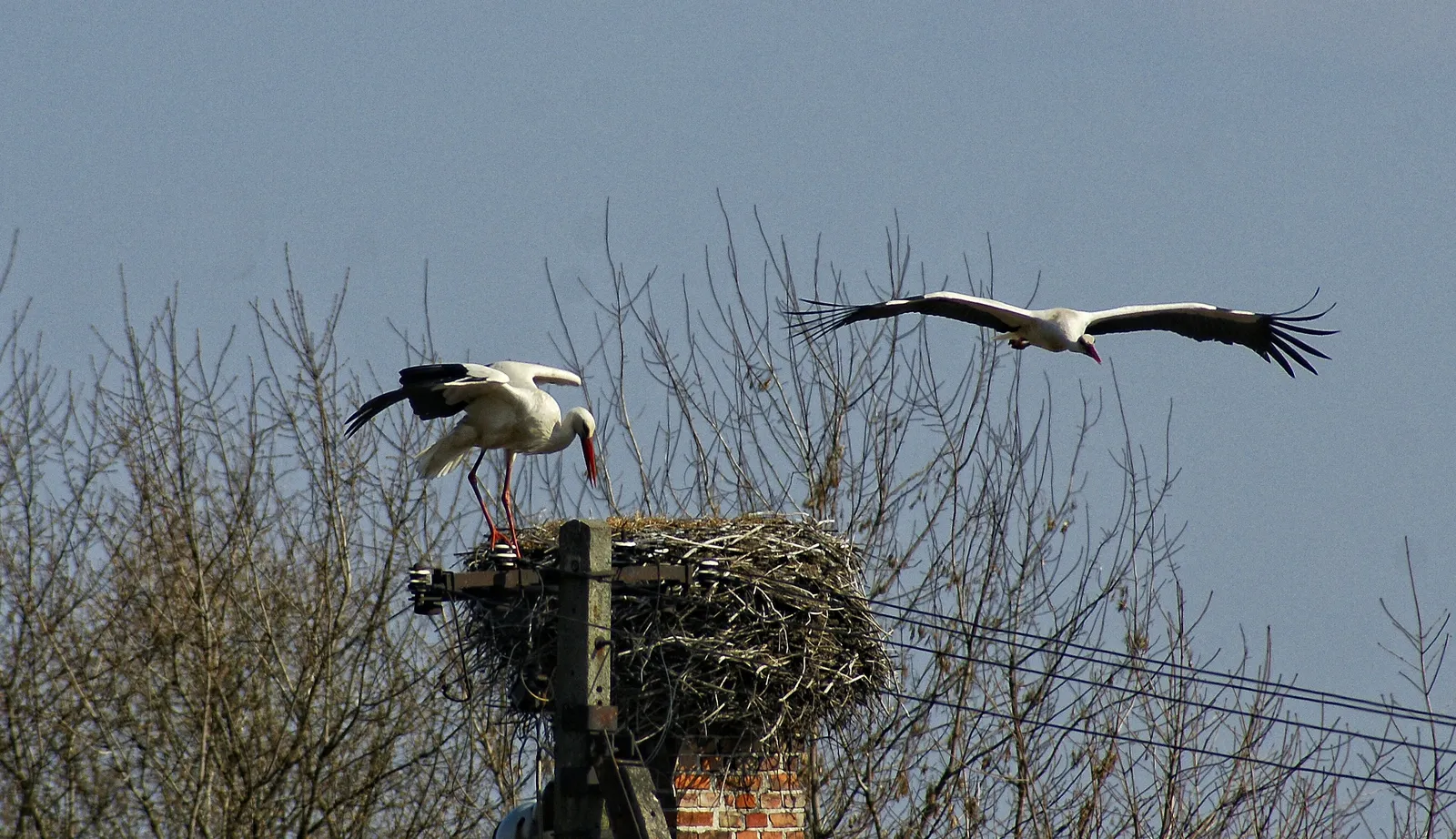
In Masuria storks are everywhere: on poles, chimneys and old trees in small villages. In Krutyń, at the headquarters of the Masurian Landscape Park, a stork rehabilitation centre has been running since 2001. It helps birds after collisions and accidents, and its information boards tell the story of their lives and migration routes.
Cranes also turn up on Lake Krzywe itself. Studies of the lake list them alongside grey herons, cormorants and bitterns. The best time to watch is early in the morning, when the water is quiet and the birds are most active.
04Wood anemones, marsh marigolds and the first green
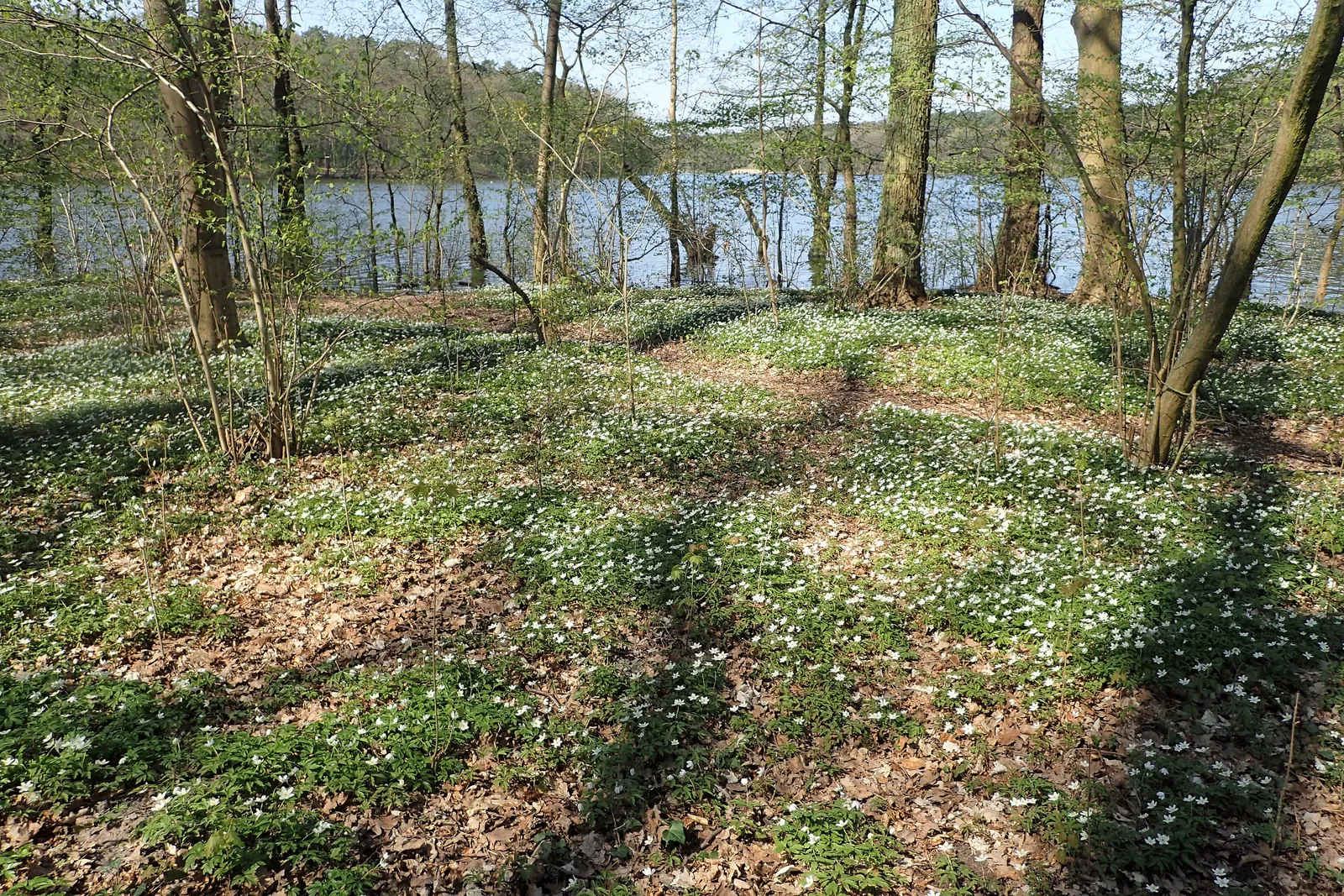
In April the forest floor briefly turns white. Wood anemones flower before the trees come into leaf and shade out the sun, so their season is short. They look loveliest in deciduous and mixed woodland, where they can cover whole slopes.
On wet meadows, along ditches and on the banks of streams, marsh marigolds appear. Their bright yellow flowers are one of the most spring-like colours in the landscape. Later, in May, the yellow moves to the fields when the rapeseed comes into flower.
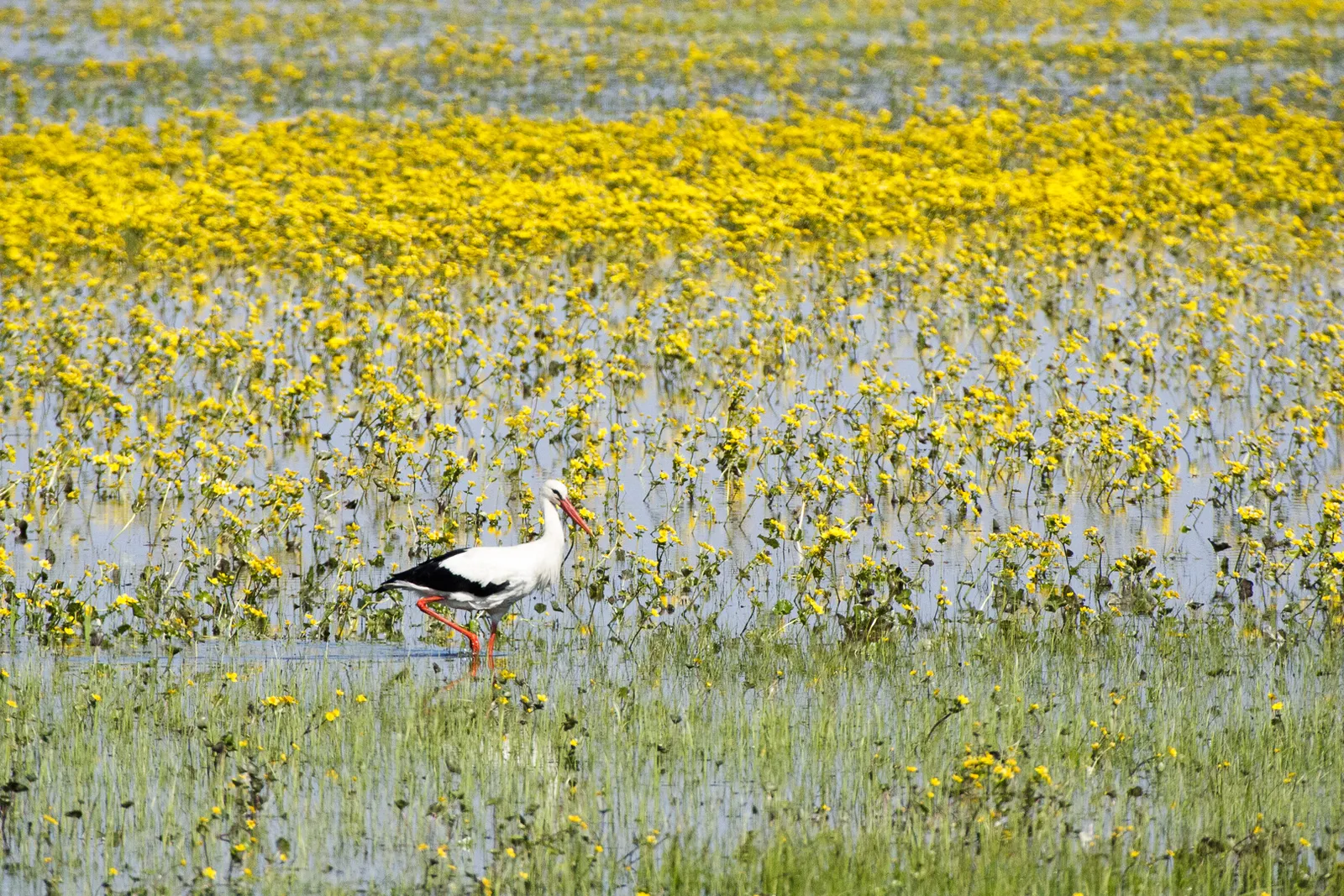
Spring flowers are best admired without picking them. Many grow in protected areas, and in nature reserves you may not pick plants or leave the marked trails.
05The Pisz Forest and the Masurian Landscape Park on spring trails
In spring the Pisz Forest is bright and open. Sunlight reaches the forest floor, the pine woods smell of resin, and on the trails you meet more birds than people.
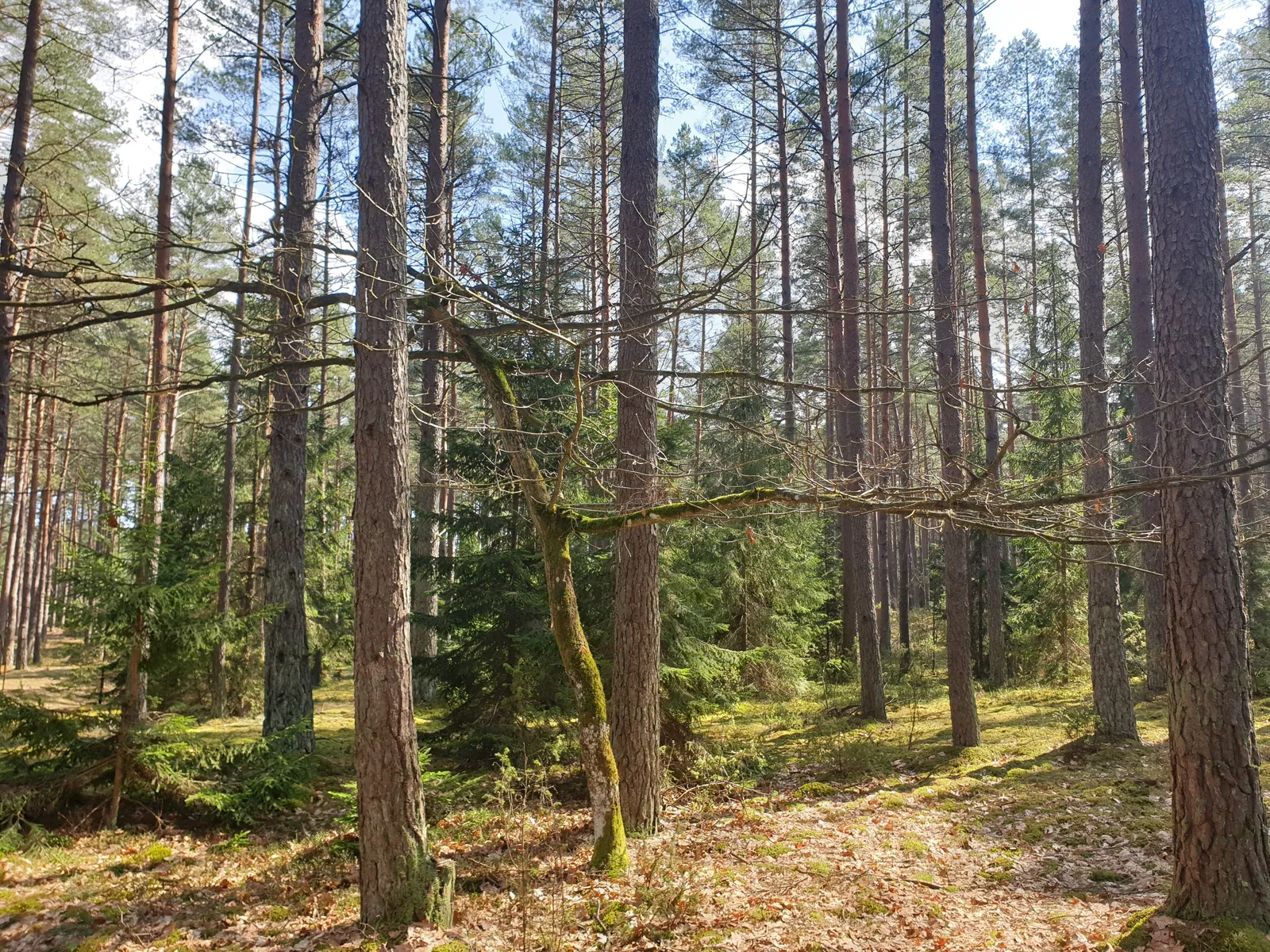
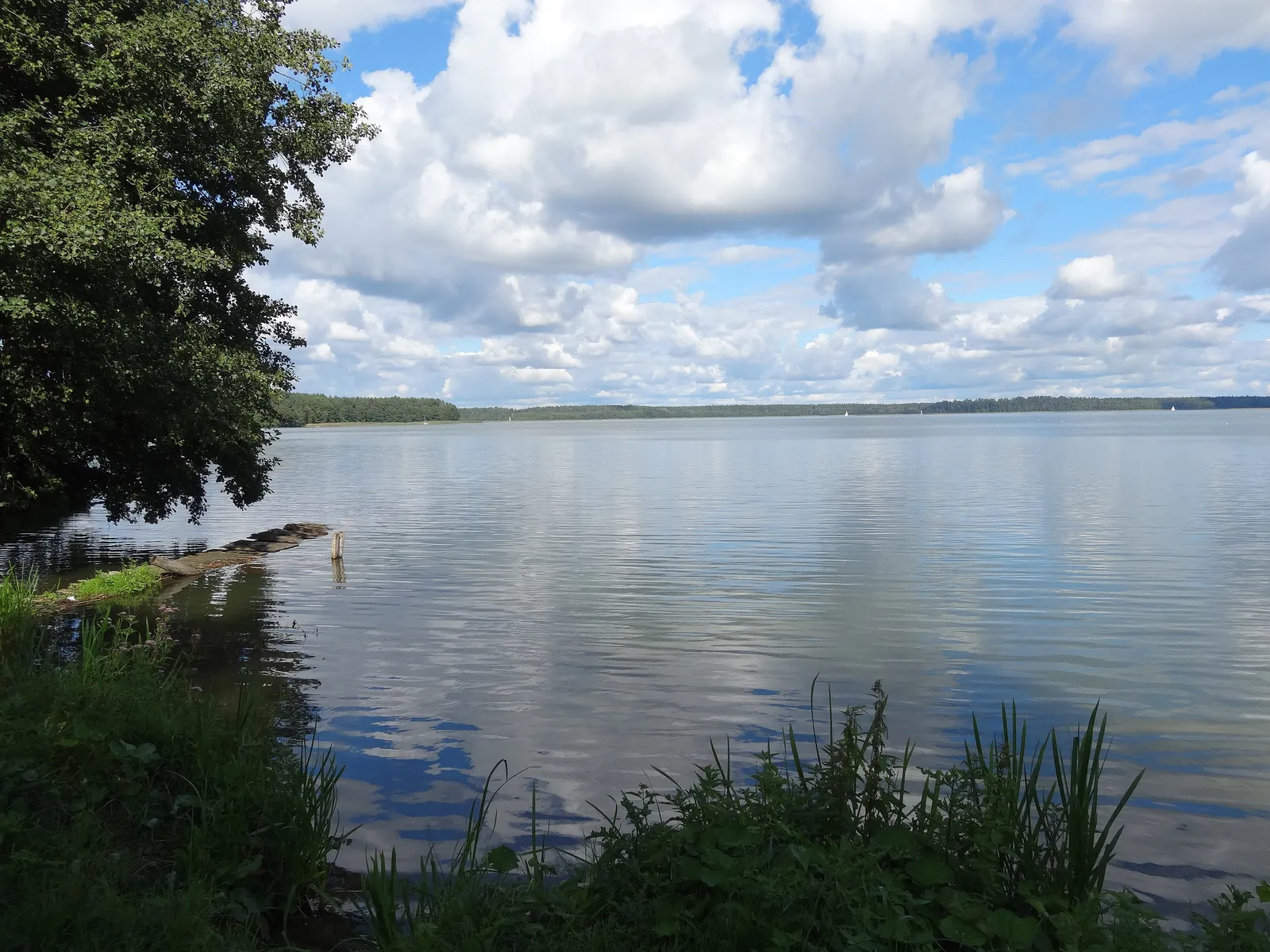
The Masurian Landscape Park, based in Krutyń, has more than 150 kilometres of nature trails and cycling routes. A good destination for a spring day is the area around Lake Mokre and the Królewska Sosna (Royal Pine) reserve, crossed by a trail from Krutyń towards Pranie. The photo at the top of this article shows Lake Mokre in April.
There is more about this part of Masuria in our guides to Piecki and Ruciane-Nida.
06The Krutynia in spring: the river before the season
In April the Krutynia is still quiet. Most kayak hire companies operate from May to September, so earlier in the spring the river is best explored from the bank: on a walk in Krutyń or from a path along the water. Swans and ducks are already on the river, and in the bankside thickets you hear birds that are only just building their nests.
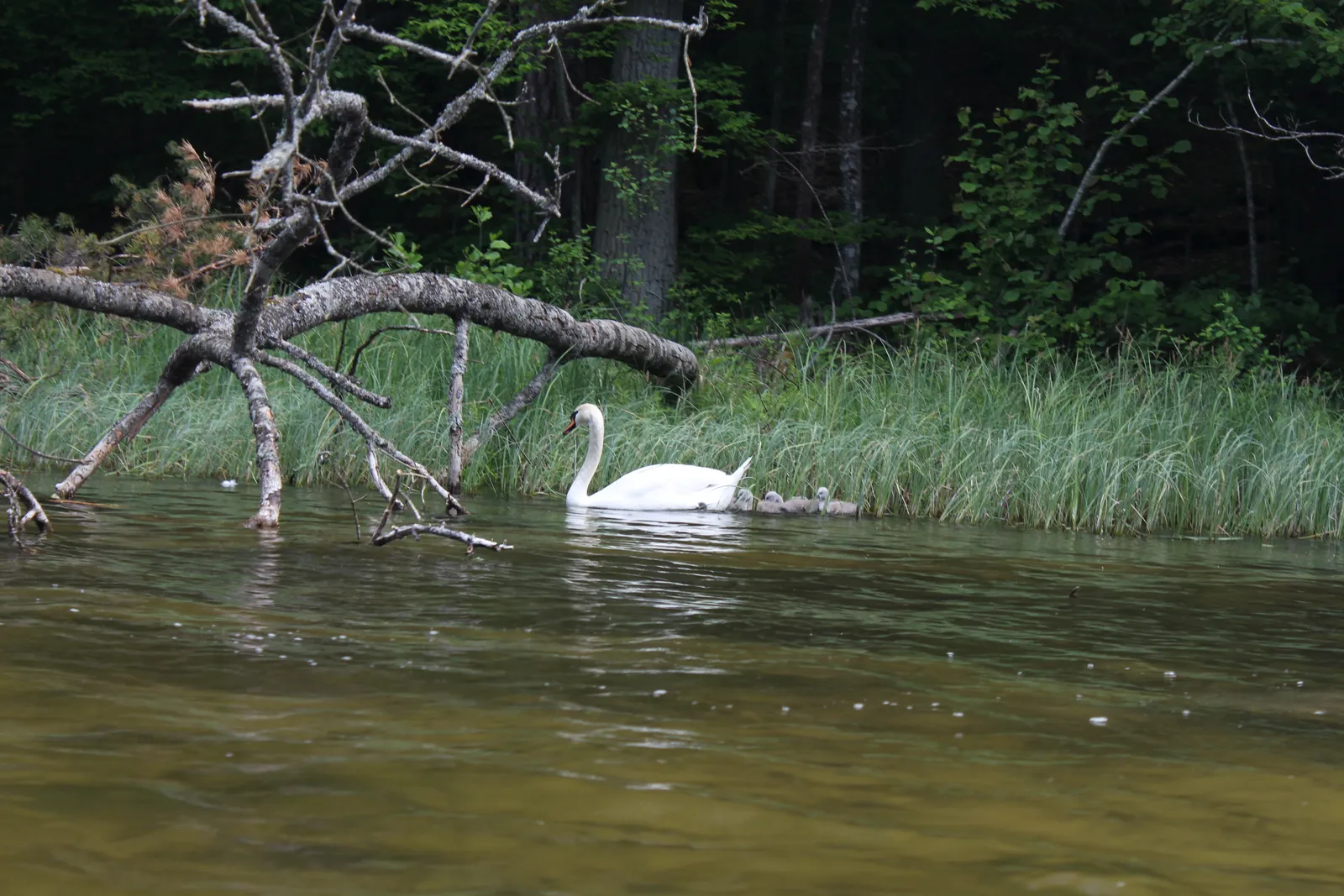
In May the season starts. The most popular stretch, from Krutyń to Ukta, is about 13 km and usually takes 3-4 hours of easy paddling. In spring just remember that the water is cold, so a warm layer and spare clothes in a dry bag are a must. From Krzywe to Krutyń is about 20 minutes by car.
07Cycling through Masuria in spring
Spring is one of the best seasons for cycling. It is not yet hot, the roads are quieter than in the summer holidays, and the landscape changes every few kilometres. According to the town, there are more than 300 km of cycling routes around Mrągowo, and around Mikołajki 12 cycling loops have been marked out with GPS tracks.
In the Masurian Landscape Park it is worth riding the Ernst Wiechert cycling trail. It is about 34.5 km long and runs from Krutyń through Piersławek and Lipowo, mainly on forest and farm tracks. After rain the forest stretches can be muddy, so save it for a drier day.
08Spring by the water for anglers
On the lakes managed by the fishery in Mrągowo, Lake Krzywe among them, pike are protected from 1 January to 30 April. From 1 May you can fish for them again, keeping to the minimum size of 50 cm. In spring you fish from the shore, as boat fishing on Lake Krzywe starts on 1 June. The easiest way to get a permit is online, ideally the day before.
09Spring weather: dress in layers
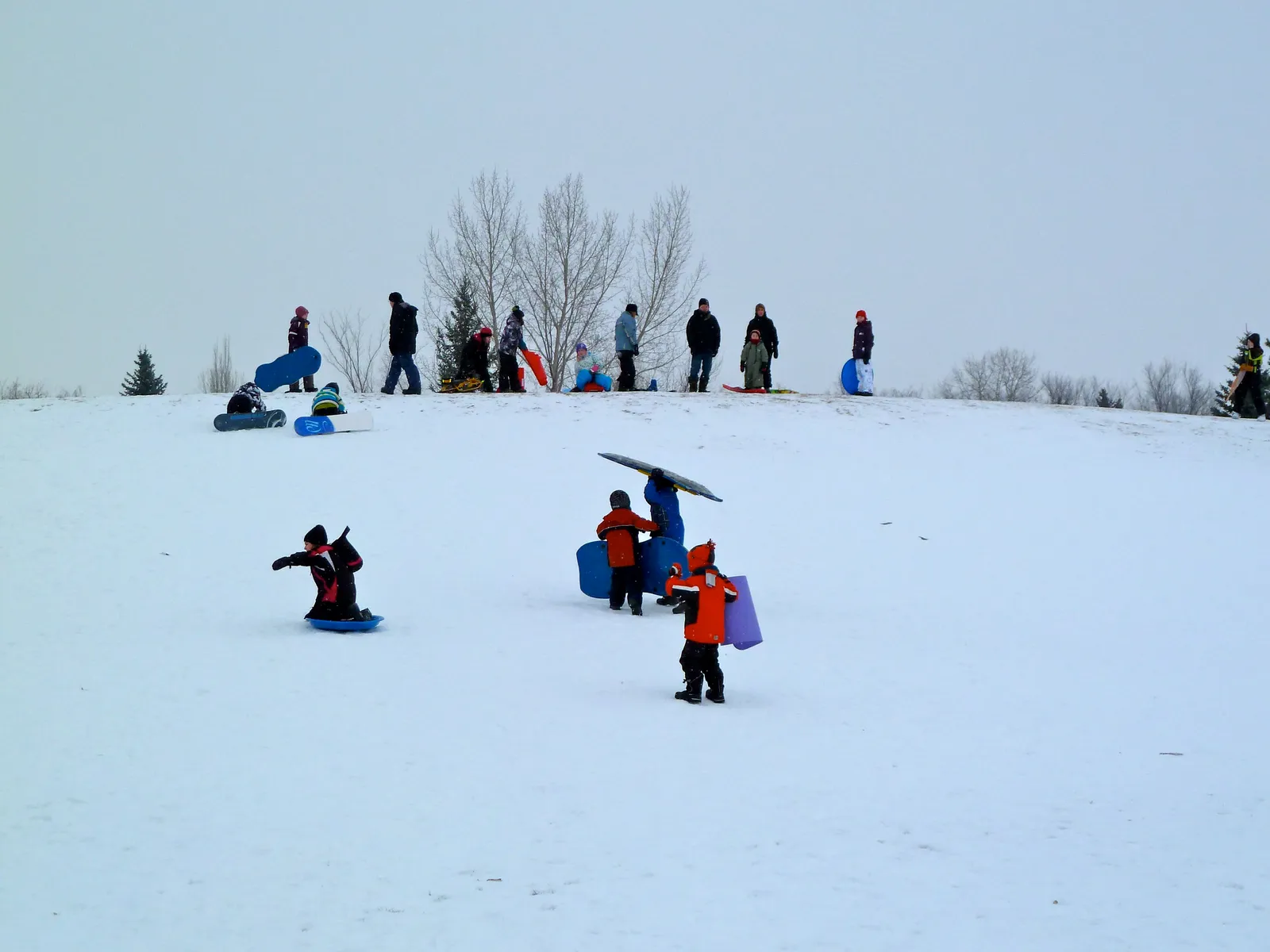
Spring in Masuria can be changeable. In March there can still be frost and snow, in April sunshine alternates with rain, and in May there are days that feel almost like summer. Mornings and evenings are noticeably cooler than the middle of the day, and it is windier by the water than in the forest.
The water in the lakes is cold in spring, so a swim is more of a challenge than a pleasure. But everything that happens by the water works beautifully: a walk along the shore, a fishing rod, a bike and a campfire. Pack layers and keep a plan you can change with the weather.
10Easter, the May long weekend and other spring breaks
The busiest spring dates in Masuria are Easter and the May long weekend. That is when houses right by the water, especially those for larger groups, disappear from the calendars first, so it is worth booking them well in advance. In between there are many quiet weeks, when it is easier to find free dates and silence by the lake.
11Krzywe Lake Houses: spring right on the lake
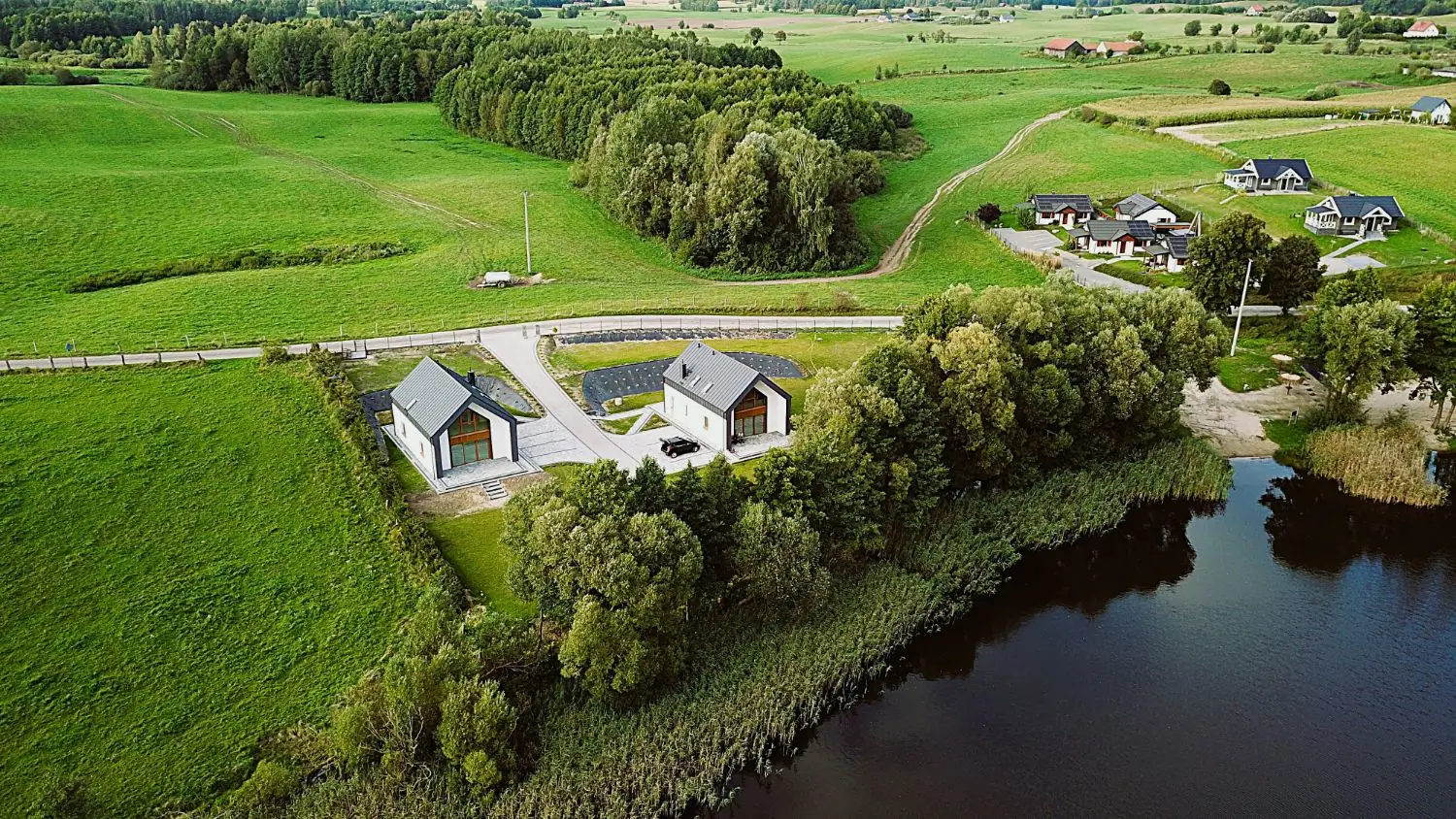
Krzywe Lake Houses are two year-round houses on Lake Krzywe, each 130 m², with four bedrooms, three bathrooms, a fully equipped kitchen and a terrace facing the lake. The houses are heated, so even a chilly March evening ends in the warm. The lake shore is about 10 metres from the terrace, and the beach with a jetty about 20 metres from the houses.
Lake Krzywe is a quiet zone where combustion engines are banned. In spring you notice it most: in the morning all you hear is the birds in the reeds and the water lapping at the jetty. Spring prices start from PLN 1,099 a night for the whole house for up to 10 guests, and from the houses it is 9 km to Mrągowo, about 20 minutes to Krutyń and about 30 minutes to Mikołajki.
12What to pack for a spring trip to Masuria
The list is short, but worth remembering in spring:
- 01a warm jacket and a fleece for chilly mornings and evenings by the campfire
- 02a rain jacket and shoes that can get muddy
- 03binoculars, if you want to watch cranes, storks and swans
- 04insect repellent for mosquitoes and ticks, which are active from early spring
- 05a bike, or a hire company nearby that you have checked in advance
- 06a good book for a rainy afternoon on the terrace
Bed linen, towels, a fully equipped kitchen, Wi-Fi and parking are waiting for you here.
13Why see Masuria in spring?
Because spring is Masuria on the move. Every week brings something new: first the calls of the cranes, then storks on their nests, white carpets of anemones, yellow marsh marigolds and finally the green that floods the whole landscape in May. Add the quiet, the empty trails and a lake that comes back to life after the winter.
In summer you look at Masuria. In spring you can watch it wake up.
A few days on Lake Krzywe, morning coffee on the jetty, a walk in the Pisz Forest and an evening by the campfire are one of the simplest ways to welcome the spring. And anyone who sees Masuria in April usually wants to come back to see what it looks like in May.